How to grow asparagus
Asparagus officinalis · Asparagaceae · Vegetable
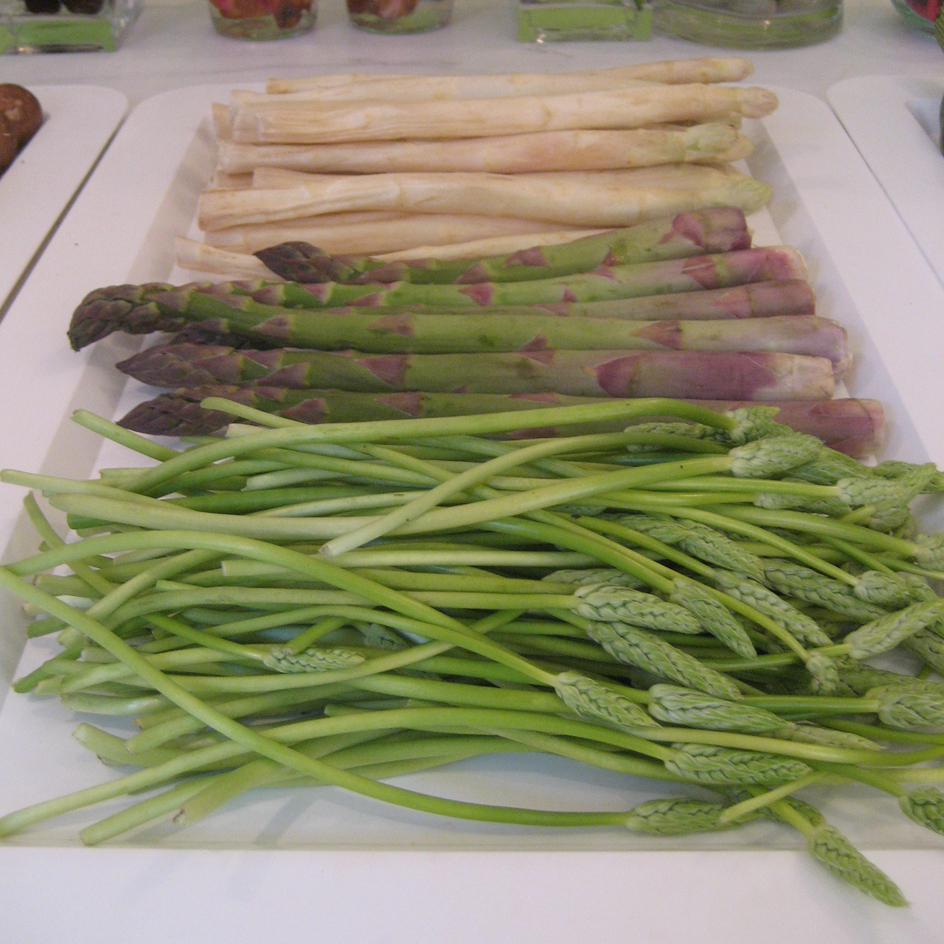
Asparagus is a cool-season vegetable in the Asparagaceae family, usually started indoors and set out as transplants. It wants full sun (six or more hours of direct light) and steady, even moisture. From sowing to first pick is about 730–1095 days. It is one of the toughest crops here, standing through hard frost and often improving for it.
Grower’s note: A 15-20 year perennial - prepare the bed thoroughly. Plant one-year-old crowns in a wide trench in early spring. Do not harvest at all the first year and only for two to three weeks the second; let the ferns grow all summer to feed the crowns.
Sowing
Sow about 6″ deep, into soil between 60–85°F — germination is quickest near 75°F. It is slow and often erratic to germinate (21–53 days).
Spacing & layout
Give each plant about 18″ along the row with roughly 48″ between rows. On a square-foot grid that is one plant per 4 square feet. Allow at least 24″ of loose, workable soil for the roots. It needs more root room than most containers give and does best in the ground.
Fitting it to your season
Asparagus is a perennial: you plant it once and it comes back and crops for years, so it does not fit the annual sow-and-harvest cycle. Give it a permanent, well-prepared spot out of the way of yearly digging. It takes one to three seasons to reach a full harvest — take little or nothing the first year while the plant establishes.
Quick facts
When to plant asparagus
Companions
Tomato, Parsley, Basil
Onion, Garlic, Potato
Common problems
Pests: asparagus beetle, cutworm.
Diseases & disorders: asparagus rust, fusarium crown rot, purple spot.
Figures are typical home-garden ranges from Cooperative Extension planting guides, cross-checked against multiple state sources. Your variety and conditions will vary.