How to grow celeriac
Apium graveolens var. rapaceum · Apiaceae · Vegetable
When to plant celeriac: the short answer
Start seeds indoors about 11 weeks before your last spring frost; plant out around the last frost date. Seeds germinate in soil from 55 to 75°F, fastest near 70°F.
Zone 5: plant out Apr 23 – May 10. Zone 7: plant out Mar 29 – Apr 15. Zone 9: plant out Feb 13 – Mar 2. See every zone.
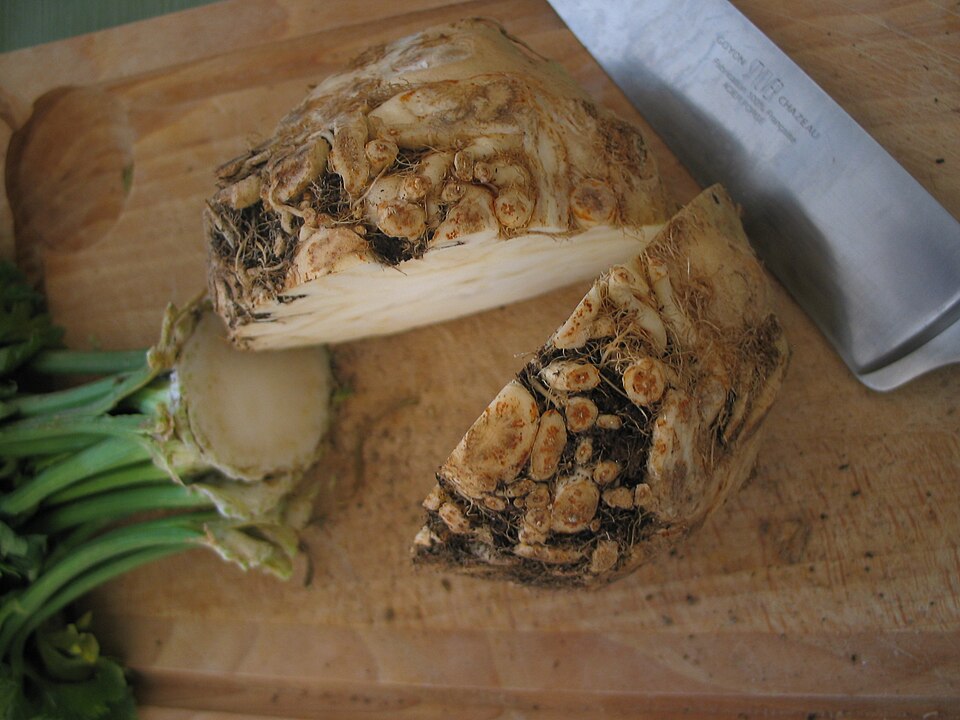
Celeriac is a cool-season vegetable in the Apiaceae family, usually started indoors and set out as transplants. It wants full sun, though it tolerates a little afternoon shade in hot regions and plenty of water, especially in hot weather. From sowing to first pick is about 100–120 days. It shrugs off a light frost but a hard freeze will damage it.
Grower’s note: Grown like celery but for the knobby swollen crown. Needs a long, cool, evenly moist season. Surface-sow the tiny seed under lights and be patient. Strip side roots and lower leaves through summer for a smoother bulb; it stands into hard frost.
Sowing
Sow barely covered — the seed needs light to germinate, into soil between 55–75°F — germination is quickest near 70°F. It is slow and often erratic to germinate (14–21 days). For an early crop, start seed indoors about 11 weeks before your last spring frost and grow it under bright light.
Spacing & layout
Give each plant about 8″ along the row with roughly 24″ between rows. On a square-foot grid that is 4 per square foot. Allow at least 12″ of loose, workable soil for the roots. It grows well in containers at least 12″ deep.
Fitting it to your season
As a cool-season crop, celeriac does its best growing in the mild weather of spring and fall and tends to bolt or turn bitter in summer heat.
Quick facts
Growth stages: how long celeriac takes to grow
From seed to first harvest takes roughly 25-28 weeks: about 11 weeks as a seedling indoors, then 100-120 days in the garden.
When to plant celeriac
When to plant celeriac by USDA zone
Dates worked out from each zone’s typical frost dates for 2026. Find your zone on the zone map, or pick your state below for dates from its own frost dates. Zones 11 and above are frost-free, so timing there depends on heat and rain instead.
| Zone | Last / first frost | Start indoors | Sow or plant out |
|---|---|---|---|
| Zone 3 | May 15 / Sep 15 | Feb 20 – Mar 6 | May 8 – May 25 |
| Zone 4 | May 10 / Sep 25 | Feb 15 – Mar 1 | May 3 – May 20 |
| Zone 5 | Apr 30 / Oct 5 | Feb 5 – Feb 19 | Apr 23 – May 10 |
| Zone 6 | Apr 15 / Oct 15 | Jan 21 – Feb 4 | Apr 8 – Apr 25 |
| Zone 7 | Apr 5 / Oct 25 | Jan 11 – Jan 25 | Mar 29 – Apr 15 |
| Zone 8 | Mar 20 / Nov 5 | Dec 26 – Jan 9 | Mar 13 – Mar 30 |
| Zone 9 | Feb 20 / Nov 30 | Nov 28 – Dec 12 | Feb 13 – Mar 2 |
| Zone 10 | Jan 30 / Dec 15 | Nov 7 – Nov 21 | Jan 23 – Feb 9 |
Companions
Leek, Onion, Cabbage, Bush Bean
Carrot, Parsnip
Common problems
Pests: carrot rust fly, celery leaftier, slugs.
Diseases & disorders: early blight, late blight, septoria leaf spot.
Same family (Apiaceae)
Rotate these so they don’t follow each other in the same bed year to year.
Questions gardeners ask
When should I plant celeriac?
Start seeds indoors about 11 weeks before your last spring frost; plant out around the last frost date. Seeds germinate in soil from 55 to 75°F. The table on this page gives dates for each USDA zone, and the planting calendar gives dates for your own state or ZIP code.
How long does celeriac take to grow?
About 100-120 days from transplanting to the first harvest, or roughly 25-28 weeks from sowing the seed indoors. Seeds germinate in 14-21 days.
How much sun does celeriac need?
It needs six or more hours of sun for the best growth, though four to six hours in partial shade is enough.
What soil pH does celeriac need?
A soil pH between 6.0 and 7.0. Test before adding lime or sulfur - see the soil pH and testing guide.
How far apart should I plant celeriac?
Space plants about 8 inches apart in rows 24 inches apart, or 4 per square foot in a square-foot bed. Sow seeds about ⅛ inch deep.
Can I grow celeriac in a container?
Yes. Use a container at least 12 inches deep with drainage holes and a good potting mix, and water more often than you would in the ground.
Figures are typical home-garden ranges from Cooperative Extension planting guides, cross-checked against multiple state sources. Your variety and conditions will vary.