How to grow eggplant
Solanum melongena · Solanaceae · Vegetable
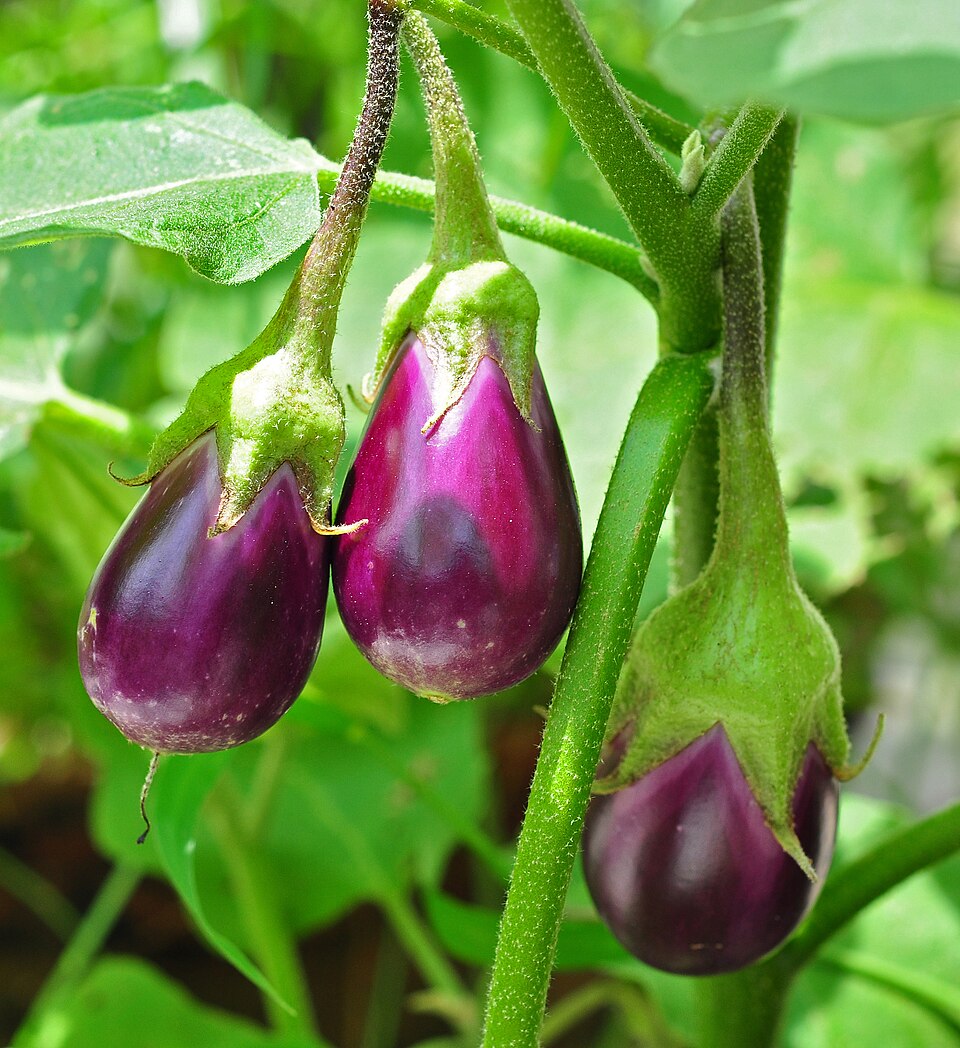
Eggplant is a warm-season vegetable in the Solanaceae family, usually started indoors and set out as transplants. It wants full sun (six or more hours of direct light) and steady, even moisture. From sowing to first pick is about 65–85 days. It is killed by frost, so nothing goes outside until the danger has passed and the soil has warmed.
Grower’s note: The most heat-demanding common vegetable - do not rush it into cold soil. Flea beetles hammer young plants; a row cover until flowering pays off.
Sowing
Sow about 0.25″ deep, into soil between 70–95°F — germination is quickest near 85°F. Germination takes a week or two (7–14 days). For an early crop, start seed indoors about 9 weeks before your last spring frost and grow it under bright light.
Spacing & layout
Give each plant about 20″ along the row with roughly 30″ between rows. On a square-foot grid that is 1 per square foot. Allow at least 18″ of loose, workable soil for the roots. It grows well in containers at least 14″ deep.
Fitting it to your season
Eggplant needs roughly 65–85 frost-free days to crop. Where the season is shorter than that, start it indoors and choose the earliest-maturing varieties, or grow it in a container you can move under cover on cold nights. In long, hot-summer regions it can often be planted twice — once in spring and again in mid-to-late summer for a fall harvest.
Quick facts
When to plant eggplant
Companions
Bush Bean, Bell Pepper, Spinach, Okra
Dill
Common problems
Pests: flea beetle, Colorado potato beetle, aphids, spider mite.
Diseases & disorders: verticillium wilt, phomopsis blight, bacterial wilt.
Same family (Solanaceae)
Rotate these so they don’t follow each other in the same bed year to year.
Figures are typical home-garden ranges from Cooperative Extension planting guides, cross-checked against multiple state sources. Your variety and conditions will vary.