How to grow sweet potato
Ipomoea batatas · Convolvulaceae · Vegetable
When to plant sweet potatoes: the short answer
Plant out about 3 weeks after it. Wait until the soil is at least 65°F; sweet potatoes sprout fastest near 80°F.
Zone 5: plant out May 14 – May 31. Zone 7: plant out Apr 19 – May 6. Zone 9: plant out Mar 6 – Mar 23. See every zone.
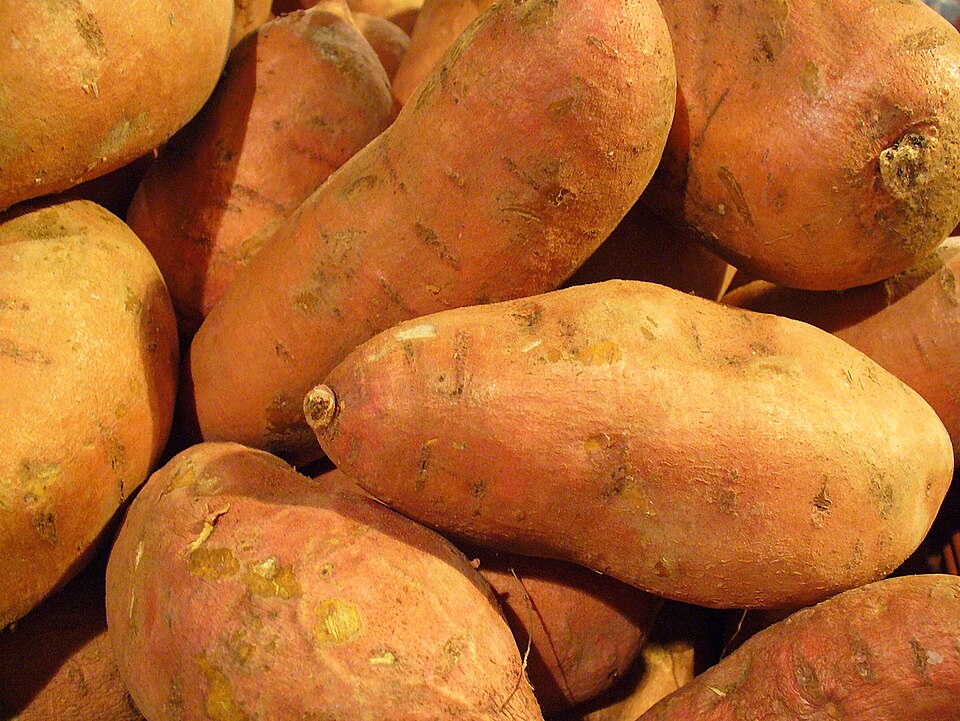
Sweet Potato is a warm-season vegetable in the Convolvulaceae family, usually started indoors and set out as transplants. It wants full sun (six or more hours of direct light) and steady, even moisture. From sowing to first pick is about 90–120 days. It is killed by frost, so nothing goes outside until the danger has passed and the soil has warmed.
Grower’s note: Grown from rooted slips, not seed, set out 3-4 weeks after the last frost once soil is thoroughly warm. Loves heat and tolerates poor soil. Cure dug roots at ~85 F and high humidity for 1-2 weeks to sweeten and store.
Sowing
Sow about 4″ deep, into soil between 65–95°F — germination is quickest near 80°F. It is slow and often erratic to germinate (7–21 days).
Spacing & layout
Give each plant about 12″ along the row with roughly 36″ between rows. On a square-foot grid that is one plant per 2 square feet. Allow at least 12″ of loose, workable soil for the roots. It grows well in containers at least 16″ deep.
Fitting it to your season
Sweet Potato needs roughly 90–120 frost-free days to crop. Where the season is shorter than that, start it indoors and choose the earliest-maturing varieties, or grow it in a container you can move under cover on cold nights. In long, hot-summer regions it can often be planted twice — once in spring and again in mid-to-late summer for a fall harvest.
Quick facts
Growth stages: how long sweet potatoes take to grow
From seed to first harvest takes roughly 22-26 weeks: about 9 weeks as a seedling indoors, then 90-120 days in the garden.
When to plant sweet potato
When to plant sweet potatoes by USDA zone
Dates worked out from each zone’s typical frost dates for 2026. Find your zone on the zone map, or pick your state below for dates from its own frost dates. Zones 11 and above are frost-free, so timing there depends on heat and rain instead.
| Zone | Last / first frost | Start indoors | Sow or plant out |
|---|---|---|---|
| Zone 3 | May 15 / Sep 15 | - | May 29 – Jun 15 |
| Zone 4 | May 10 / Sep 25 | - | May 24 – Jun 10 |
| Zone 5 | Apr 30 / Oct 5 | - | May 14 – May 31 |
| Zone 6 | Apr 15 / Oct 15 | - | Apr 29 – May 16 |
| Zone 7 | Apr 5 / Oct 25 | - | Apr 19 – May 6 |
| Zone 8 | Mar 20 / Nov 5 | - | Apr 3 – Apr 20 |
| Zone 9 | Feb 20 / Nov 30 | - | Mar 6 – Mar 23 |
| Zone 10 | Jan 30 / Dec 15 | - | Feb 13 – Mar 2 |
Companions
Bush Bean, Okra
Winter Squash, Pumpkin
Common problems
Pests: sweet potato weevil, flea beetle, wireworm.
Diseases & disorders: fusarium wilt, scurf, black rot.
Questions gardeners ask
When should I plant sweet potatoes?
Plant out about 3 weeks after it. Wait until the soil is at least 65°F. The table on this page gives dates for each USDA zone, and the planting calendar gives dates for your own state or ZIP code.
How long do sweet potatoes take to grow?
About 90-120 days from transplanting to the first harvest, or roughly 22-26 weeks from sowing the seed indoors. Seeds germinate in 7-21 days.
How much sun do sweet potatoes need?
They need at least six to eight hours of direct sun a day.
What soil pH do sweet potatoes need?
A soil pH between 5.5 and 6.5. It tolerates fairly acidic soil better than most vegetables. Test before adding lime or sulfur - see the soil pH and testing guide.
How far apart should I plant sweet potatoes?
Space plants about 12 inches apart in rows 36 inches apart, or one plant per 2 square feet in a square-foot bed. Sow seeds about 4 inches deep.
Can I grow sweet potatoes in a container?
Yes. Use a container at least 16 inches deep with drainage holes and a good potting mix, and water more often than you would in the ground.
Figures are typical home-garden ranges from Cooperative Extension planting guides, cross-checked against multiple state sources. Your variety and conditions will vary.