Transplanting seedlings without shock
Last reviewed September 2026 · written from public-domain USDA/NOAA data and Cooperative Extension references — see how we source data
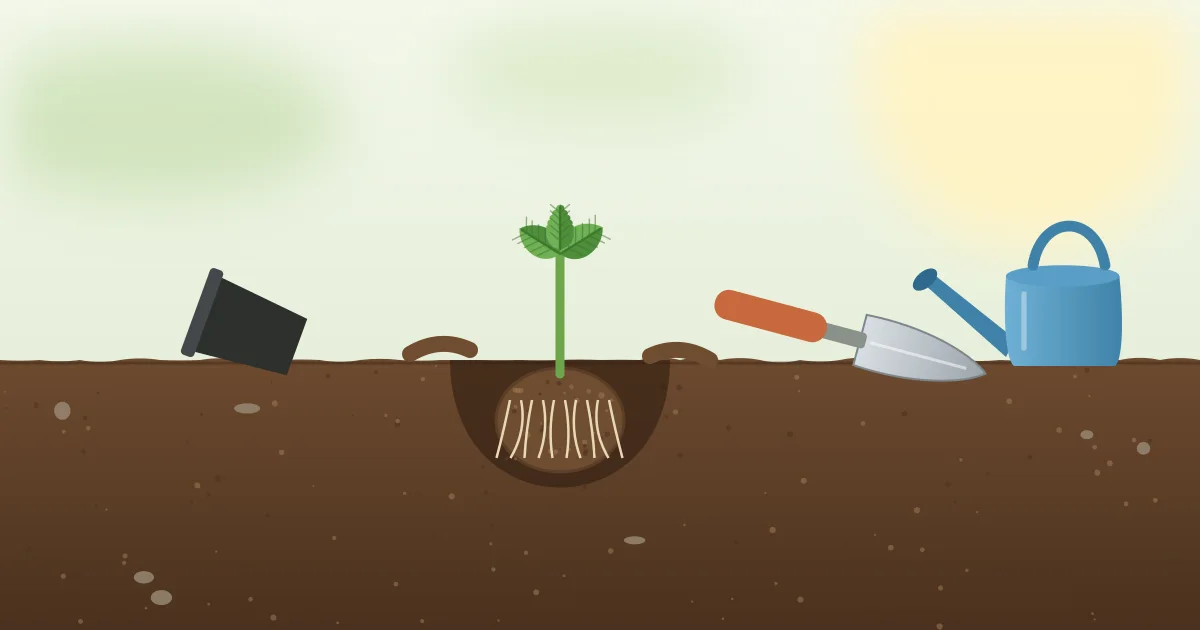
A well-grown, properly hardened-off seedling can still stall badly from a rough transplant. Getting the move itself right is a separate skill from growing the seedling.
Timing it right
Transplant on a cloudy, calm day, or in the evening — never in full sun during the hottest part of the afternoon. Roots have not re-established their connection to the soil yet, so any extra stress in that window compounds.
Prepping the seedling
Water the seedling well an hour or so before transplanting. A moist root ball holds together as one piece when it comes out of the pot; a dry one crumbles and tears fine roots in the process.
Handling roots gently
Lift and hold seedlings by a leaf or the root ball itself, never by the stem — a bruised leaf grows back, a crushed stem kills the plant outright.
Settling it in
Dig a hole a little deeper than the root ball. Tomatoes are the exception worth knowing: bury the stem deeper than it was growing, since it roots readily along any buried stem section for a stronger plant. Backfill, firm gently, and water in immediately to close air gaps around the roots.
Transplanting in six steps
- 1WaterSoak the seedling an hour before, so the root ball holds together.
- 2DigMake the hole a little wider and deeper than the root ball.
- 3LiftTip the pot and ease the plant out by the root ball or a leaf - never the stem.
- 4SetPlant at the right depth for the crop (below).
- 5Firm & waterFirm gently and water straight away to settle soil around the roots.
- 6ShadeIn strong sun, shade for 2-3 days and keep the soil moist.
HOW DEEP TO PLANT
Planting depth by crop
Most seedlings go in at the same depth they grew in the pot. Tomatoes are planted deeper, with up to two-thirds of the stem buried. Cabbage-family seedlings can go in up to their first true leaves, which steadies leggy stems.
Squash, cucumbers and melons should sit at the same level as before - burying their stems invites rot - and their roots dislike being disturbed, so tip them out whole.
Root-bound seedlings
If roots circle the outside of the root ball, gently tease the outer ones loose with your fingers so they grow out into the soil rather than continuing to circle. Do not do this with squash-family seedlings; plant them as they come.
Aftercare for the first week
Water daily for the first few days unless it rains, then taper off as the plants start to grow. In hot sun, shade new transplants for two or three days with a board, a sheet of shade cloth or an upturned basket.
Some wilting on the first afternoon is normal. A plant that has recovered by the next morning is fine; one that is still limp needs water and shade.
Signs of transplant shock
Wilting that does not recover, yellowing lower leaves and growth that stalls for a week or two. Most plants recover if the soil is kept evenly moist. Hold off on heavy feeding until new growth appears - the roots cannot use it yet.
Common questions
How do I prevent transplant shock?
Harden seedlings off first, water them an hour before moving them, transplant on a cloudy day or in the evening, keep the root ball intact, water in straight away and shade them for a couple of days if the sun is strong.
Should I water seedlings before transplanting?
Yes - about an hour beforehand. A moist root ball slides out of the pot in one piece, so fewer fine roots tear. Water again as soon as the plant is in the ground.
How deep should I plant tomato seedlings?
Deep - bury up to two-thirds of the stem, removing any leaves that would end up below the soil. Tomatoes grow roots all along the buried stem, which makes a sturdier, more drought-tolerant plant.
Can I transplant in the middle of the day?
It is best avoided. Strong sun and heat pull water from the leaves before the roots have settled in. If you must, water well and shade the plants for the rest of the day.