Disease
Basil leaves turning black, spotted, or fuzzy gray underneath
Last reviewed September 2026 · written from Cooperative Extension and university horticulture references — see how we source data
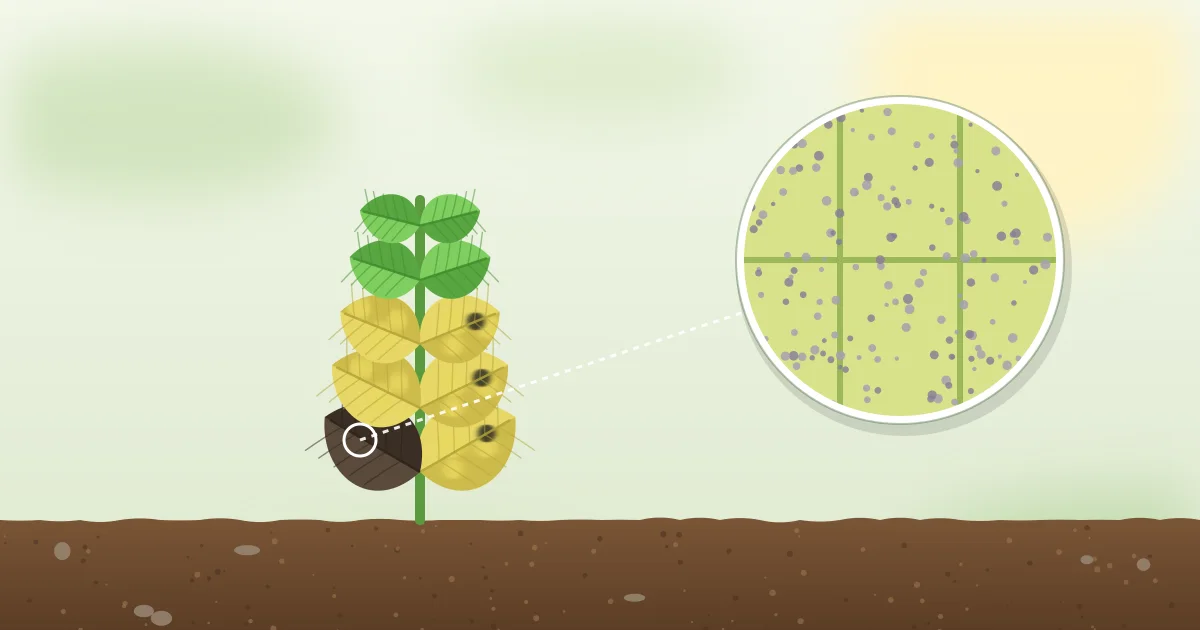
What you’re seeing
Leaves develop yellow, angular blotches on the upper surface (often following the leaf veins) with a matching fuzzy gray-to-purple mold visible on the underside directly beneath the yellow patch; affected leaves eventually turn brown or black and the whole plant can decline quickly.
Could it be something else?
Likely causes
Ranked most common first.
- Basil downy mildew (Peronospora belbahrii). This water-mold pathogen spreads via airborne spores and has become widespread in basil growing regions over the past couple of decades; it thrives in humid, poorly-ventilated conditions.
- High humidity and crowded planting. Dense basil plantings with still, humid air around the leaves - common in greenhouses and humid gardens alike - create ideal conditions for the disease to spread.
- Infected seed or transplants. The pathogen can be seed-borne, meaning a planting can start infected even in dry conditions.
How to fix it
- Remove and destroy infected leaves and, if the infection is severe, the whole plant - there is no effective home cure once downy mildew is established.
- Increase spacing and airflow around remaining basil plants immediately to slow further spread.
- Water at the soil line rather than overhead, and water in the morning so any leaf moisture dries quickly during the day.
- Harvest what is still usable promptly - lightly affected leaves without visible mold can still be used, just check the undersides first.
- Switch to a downy-mildew-resistant basil variety (several have been bred specifically for this) for future plantings if this recurs every year.
Common mistakes
- Watering over the top in the evening, which keeps leaves wet overnight.
- Crowding basil plants together, so leaves stay humid and never dry out.
- Buying transplants without checking the leaf undersides for grey fuzz.
- Waiting to harvest once symptoms appear. Pick all the healthy leaves straight away and make pesto before the disease spreads.
When and where it shows up
Basil downy mildew reached the United States in 2007 and now appears in most summers, usually from mid to late summer. Its spores travel on the wind and it spreads fastest in humid weather with warm days, cool nights and heavy dew. Sweet basil is the most susceptible; Thai, lemon and some red basils are less affected, and resistant varieties are available.
Preventing it next time
Buy resistant varieties, space plants generously for airflow, and avoid overhead watering - downy mildew spreads so easily once established that prevention matters far more than any fix.
Questions gardeners ask
Can I eat basil with downy mildew?
Leaves without symptoms are fine to eat. Affected leaves are safe but taste poor and look unappetizing, so discard them.
Why does basil turn black in the fridge?
That is cold damage, not disease. Store cut basil at room temperature with the stems in a glass of water.
Are there basil varieties resistant to downy mildew?
Yes. Breeders, including Rutgers University, have released resistant sweet basils, often marked DMR (downy mildew resistant) in catalogues.
Will basil downy mildew spread to my other plants?
No. This downy mildew is specific to basil and will not infect tomatoes, cucumbers or other vegetables.