Nutrient
Blueberry leaves turning red or yellow between the veins
Last reviewed September 2026 · written from Cooperative Extension and university horticulture references — see how we source data
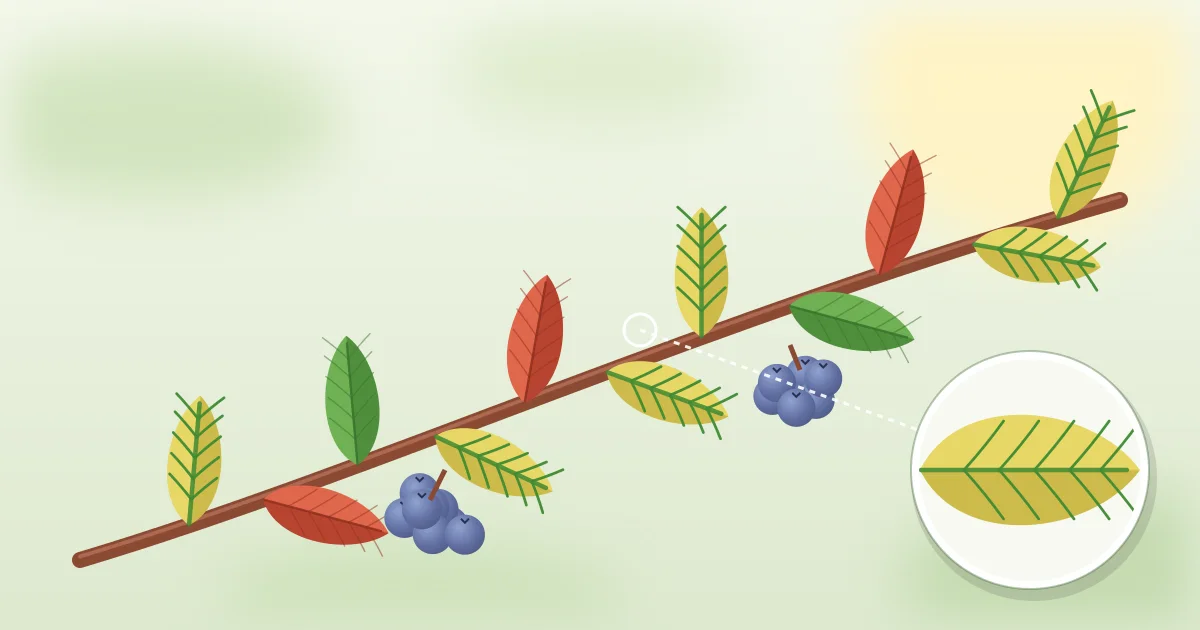
What you’re seeing
Leaves turn reddish, yellow, or pale between the veins while the veins stay green (interveinal chlorosis), often paired with weak, stunted new growth and poor fruit set, even in soil that seems otherwise fine for other plants.
Could it be something else?
Likely causes
Ranked most common first.
- Soil pH too high. Blueberries need distinctly acidic soil, roughly pH 4.5-5.5, far lower than most vegetables want; at typical garden pH (6.5-7.0), blueberries cannot access iron and other nutrients even when those minerals are present in the soil.
- Planted in regular garden soil or amended with wood ash or lime. Both raise pH, which is the opposite of what blueberries need, and either can push soil out of range even if it started acceptable.
- Poor drainage. Blueberries have shallow, fine roots that are easily damaged by waterlogged soil, which compounds nutrient uptake problems on top of any pH issue.
How to fix it
- Test soil pH specifically around the blueberry - a reading above about 5.8 is very likely the real cause and takes priority over any direct fertilizer fix.
- Lower pH gradually with elemental sulfur worked into the soil around the root zone, following soil-test-based application rates; this takes months to fully take effect, not days.
- Mulch with pine bark, pine needles, or peat moss, all of which are naturally acidic and help maintain lower pH over time as they break down.
- Apply chelated iron as a foliar spray for a faster visible improvement on affected leaves while the slower soil pH correction takes hold underground.
- Avoid any lime, wood ash, or alkaline amendment anywhere near blueberry plants going forward.
Common mistakes
- Planting blueberries in regular garden soil without testing and adjusting pH first.
- Using aluminum sulfate to acidify. Aluminum can build up to harmful levels - elemental sulfur is the safer choice.
- Expecting sulfur to work in days. It takes months to lower pH, so apply it well ahead and retest.
- Mulching with wood ash or spreading lime nearby. Both raise pH, which is the opposite of what blueberries need.
When and where it shows up
The problem shows during spring and summer growth, and most often on blueberries planted straight into ordinary garden soil, near concrete foundations or paths (which leach lime), or watered with hard, alkaline water. It can appear a year or two after planting as the acidic planting mix gets diluted by surrounding soil. See soil pH and testing for how to measure and adjust pH.
Preventing it next time
Test soil pH before planting blueberries and amend with sulfur or peat to get it into the 4.5-5.5 range beforehand, then mulch yearly with pine needles or bark to help maintain it.
Questions gardeners ask
What pH do blueberries need?
Roughly 4.5 to 5.5 - far more acidic than most vegetables, which prefer about 6.0 to 7.0.
Do coffee grounds acidify soil for blueberries?
Only slightly and unreliably. Used grounds are close to neutral. Elemental sulfur and acidic mulches like pine needles or pine bark are more dependable.
Should I grow blueberries in containers instead?
If your soil is alkaline, yes - it's often easier. Use an acidic mix made for azaleas or blueberries and water with rainwater if your tap water is hard.
Which blueberry type suits my climate?
Northern highbush need cold winters, southern highbush and rabbiteye suit warm ones. See northern highbush, southern highbush and rabbiteye.