Environmental
Lettuce and herbs suddenly flowering and turning bitter: bolting
Last reviewed September 2026 · written from Cooperative Extension and university horticulture references — see how we source data
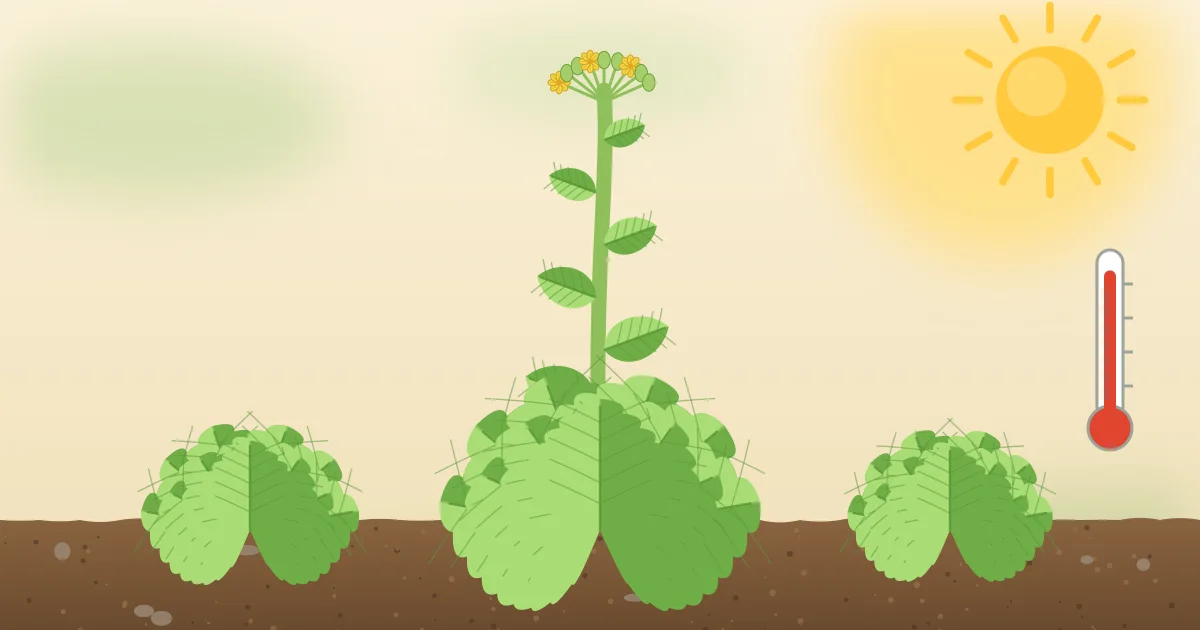
What you’re seeing
A leafy crop that was growing normally suddenly sends up a tall central stalk topped with flower buds, and the leaves - especially in lettuce and many herbs - turn noticeably more bitter at the same time.
Could it be something else?
Likely causes
Ranked most common first.
- Rising temperatures. Most cool-season leafy crops (lettuce, spinach, cilantro, arugula) are genetically triggered to bolt once temperatures consistently exceed a fairly modest threshold, often in the 75-80°F range.
- Day length (in some crops). Certain crops, including spinach and some brassicas, bolt in response to lengthening daylight hours in late spring regardless of temperature.
- Plant maturity and stress. A plant nearing the natural end of its productive life, or one stressed by drought, root crowding, or a cold snap during early growth, is more likely to bolt early.
- Started too late in the season. Cool-season crops sown so late that they mature right as hot weather arrives have no window to grow before hitting their bolt trigger.
How to fix it
- Harvest immediately once you see the central stalk starting to elongate - leaves are still usable for a few more days but get progressively more bitter as the stalk grows.
- Pull and compost plants that have fully bolted and flowered; leaves at that point are usually too bitter to be worth saving.
- If you want seed, let one or two of the best plants finish bolting and flowering rather than pulling everything, since bolted plants are exactly how you save your own seed.
- Shift future plantings of the same crop earlier in spring or later in fall so the crop matures during cool weather rather than heading into a hot stretch.
- Provide afternoon shade during an unexpected warm spell to buy a few extra days before bolting starts.
Common mistakes
- Sowing cool-season crops late in spring so they mature right into the heat.
- Letting plants dry out. Drought stress speeds up bolting.
- Cutting off the flower stalk and expecting the flavour to come back. It may delay flowering briefly, but the leaves have already turned bitter.
- Growing one big planting. Small sowings every couple of weeks give a steady supply - try the succession planting planner.
When and where it shows up
Bolting happens as days lengthen and temperatures climb in late spring and early summer. Lettuce, spinach, cilantro, arugula, bok choy and broccoli are the usual suspects. Timing crops so they mature in cool weather is the main fix - your planting calendar shows spring and fall sowing windows for each.
Preventing it next time
Choose slow-to-bolt or heat-tolerant varieties, plant cool-season crops early enough to mature before hot weather arrives, and keep them consistently watered since drought stress accelerates bolting.
Questions gardeners ask
Is bolted lettuce safe to eat?
Yes, just more bitter. Young leaves near the top of the stalk are usually the least bitter; soaking leaves in cold water can help a little.
Which varieties resist bolting?
Look for words like slow-bolt, bolt-resistant or heat-tolerant on the seed packet. Summer crisp and romaine lettuces generally hold longer in heat than loose-leaf types.
Can I get coriander seed from bolted cilantro?
Yes. Let the flowers set seed and dry on the plant, then collect them - that's coriander. Some will drop and resow themselves for a fall crop.
Does shade stop bolting?
It can delay it. Afternoon shade cloth keeps the plant a few degrees cooler and can buy a week or two in late spring.