Environmental
Garden shredded by hail or a bad storm: what to do
Last reviewed September 2026 · written from Cooperative Extension and university horticulture references — see how we source data
What you’re seeing
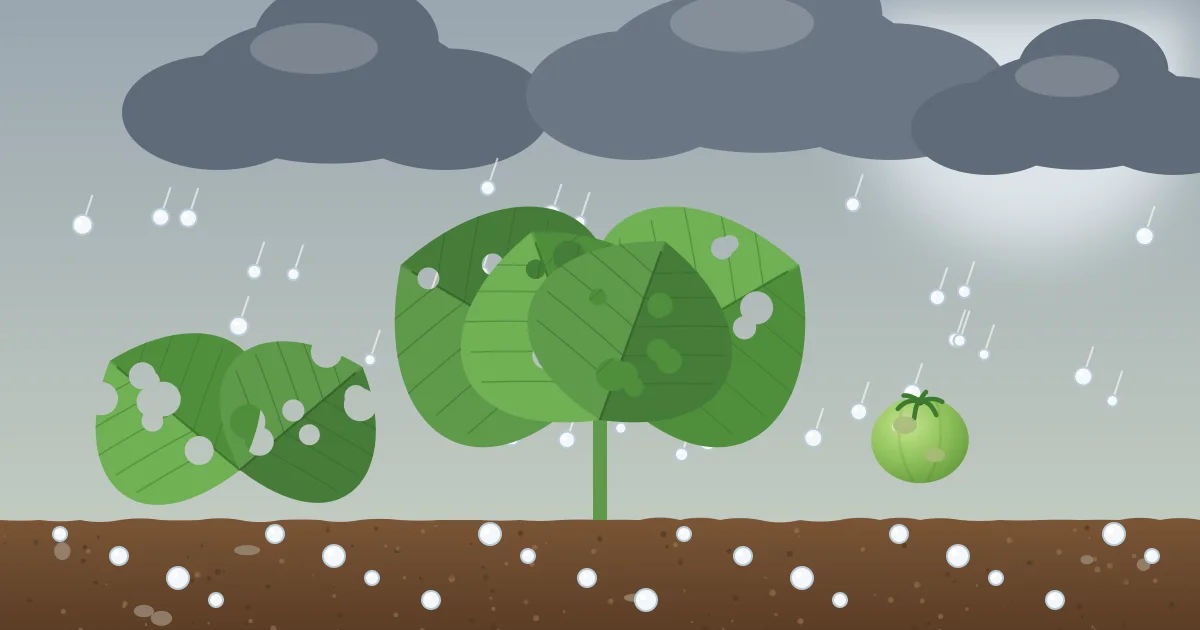
Leaves are shredded, torn, or stripped, stems are bruised or broken, and fruit may show pockmarks or splits, all appearing suddenly after a hailstorm or violent wind and rain event.
Could it be something else?
Likely causes
Ranked most common first.
- Direct physical impact damage. Hail and wind-driven debris physically tear leaf tissue and bruise or break stems, which is straightforward damage rather than anything requiring diagnosis.
- Open wounds inviting disease and rot. The real secondary risk after storm damage is that torn tissue and bruised fruit are easy entry points for fungal and bacterial disease over the following days.
How to fix it
- Wait a few days before making drastic decisions - many plants that look devastated push new growth and recover a surprising amount within a week or two, especially if the growing point (main stem tip) survived.
- Trim off clearly broken or hanging stems and badly shredded leaves with clean cuts, which both tidies the plant and removes some disease entry points, but avoid heavy pruning of tissue that is merely torn rather than truly broken.
- Harvest any split or badly pockmarked fruit promptly rather than leaving it to rot on the plant, since damaged fruit is highly prone to secondary rot.
- Watch damaged plants more closely than usual over the following two weeks for signs of fungal or bacterial infection starting at wound sites, and treat those specifically if they appear rather than treating the storm damage itself.
- Give the whole garden a light, balanced feeding and consistent water in the week after a bad storm to support recovery, without overdoing nitrogen.
Common mistakes
- Pulling up plants the next morning. Give them a week - many regrow from the growing tip or side shoots.
- Cutting away every torn leaf. Torn leaves still make food for the plant; remove only what is broken or dead.
- Leaving bruised fruit on the plant to rot and spread disease.
- Feeding heavily with nitrogen to push regrowth, which makes soft, disease-prone leaves.
When and where it shows up
Hail is most common in late spring and early summer, from strong thunderstorms. Young transplants, broad-leaved crops such as zucchini, cucumbers, swiss chard and lettuce, and ripening tomatoes show the worst damage. Plants hit early in the season usually have time to regrow; late-season hits on fruit are harder to make up.
Preventing it next time
There is no reliable way to prevent hail damage itself; row cover or a temporary cloche can help for a forecast hailstorm on a small planting, but for most gardens the real prevention is simply having a recovery plan ready rather than trying to stop it happening.
Questions gardeners ask
Will my plants recover from hail damage?
Usually, if the main growing tip survived. Most vegetables push out new leaves within one to two weeks of a hailstorm in early or mid season.
Can I eat vegetables damaged by hail?
Yes. Cut away bruised or split parts and use the produce soon, since damaged fruit does not store well.
Should I replant after hail?
Check the calendar first. If there is enough season left for the crop to mature, quick crops like beans, lettuce and radishes can be resown. Use the frost dates for your area to judge.
Can I protect plants when hail is forecast?
Small plantings can be covered with buckets, row cover over hoops or an old sheet, weighed down. Remove covers once the storm passes so plants do not overheat.