How to grow summer savory
Satureja hortensis · Lamiaceae · Herb
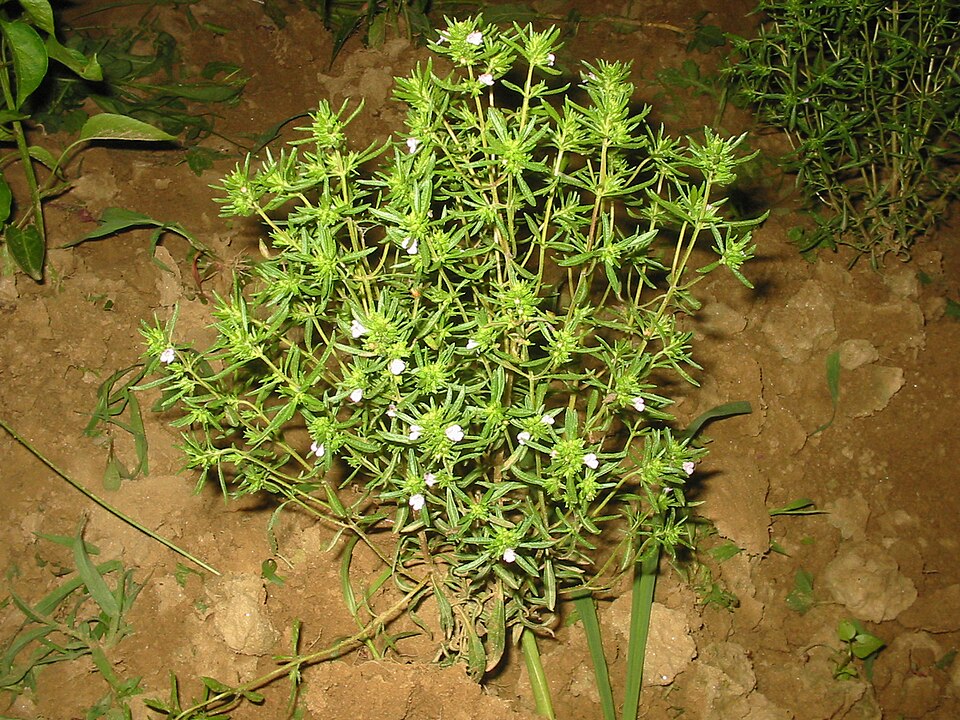
Summer Savory is a warm-season herb in the Lamiaceae family, grown either from a direct sowing or from transplants. It wants full sun (six or more hours of direct light) and modest, occasional watering. From sowing to first pick is about 55–70 days. It is killed by frost, so nothing goes outside until the danger has passed and the soil has warmed.
Grower’s note: The classic 'bean herb' - a peppery annual cooked with green beans and lentils, and said to deter bean beetles. Grows fast and lax; shear it before it flowers for the best flavour. Winter savory is the hardy perennial cousin.
Sowing
Sow barely covered — the seed needs light to germinate, into soil between 60–80°F — germination is quickest near 70°F. Germination takes a week or two (7–14 days). For an early crop, start seed indoors about 5 weeks before your last spring frost and grow it under bright light.
Spacing & layout
Give each plant about 6″ along the row with roughly 10″ between rows. On a square-foot grid that is 4 per square foot. Allow at least 8″ of loose, workable soil for the roots. It grows well in containers at least 8″ deep.
Fitting it to your season
Summer Savory needs roughly 55–70 frost-free days to crop. Where the season is shorter than that, start it indoors and choose the earliest-maturing varieties, or grow it in a container you can move under cover on cold nights. In long, hot-summer regions it can often be planted twice — once in spring and again in mid-to-late summer for a fall harvest.
Quick facts
When to plant summer savory
Companions
Bush Bean, Pole Bean, Onion
No strong antagonists recorded.
Common problems
Pests: aphids.
Diseases & disorders: root rot.
Same family (Lamiaceae)
Rotate these so they don’t follow each other in the same bed year to year.
Figures are typical home-garden ranges from Cooperative Extension planting guides, cross-checked against multiple state sources. Your variety and conditions will vary.