Pest
Aphids covering new growth: how to get rid of them
Last reviewed September 2026 · written from Cooperative Extension and university horticulture references — see how we source data
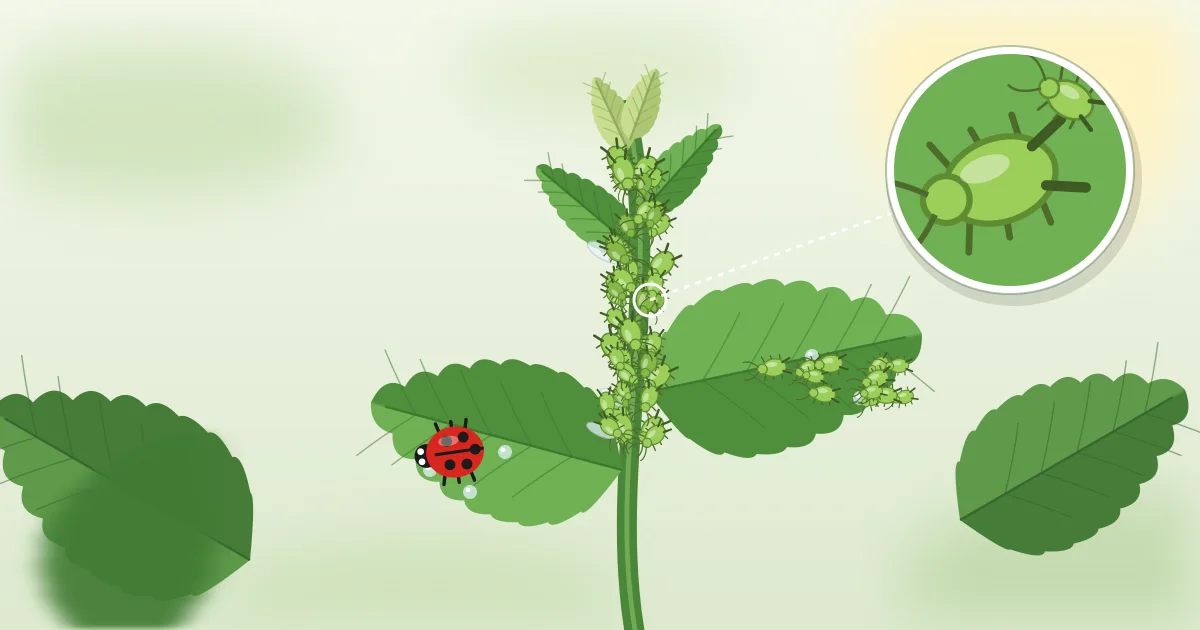
What you’re seeing
Clusters of tiny (1/16 to 1/8 inch) soft-bodied insects - green, black, gray or pink - crowded on the undersides of leaves and on new shoot tips. Leaves may look curled, yellowed, or coated in a sticky film, sometimes with a black sooty mold growing on that film.
Could it be something else?
Likely causes
Ranked most common first.
- A mild, dry spring. Aphid populations explode in mild weather with no hard rain to knock them off leaves; a single female can produce dozens of live young without mating.
- Too much nitrogen. Heavily fertilized plants push soft, sappy new growth that aphids prefer over tougher, slower-growing tissue.
- No natural predators yet. Ladybugs, lacewings and parasitic wasps usually show up a few weeks after aphids do; early-season infestations often get ahead of their predators.
- Ants tending the colony. Ants farm aphids for their sugary honeydew and will actively defend colonies from predators, letting populations run higher than they otherwise would.
How to fix it
- Knock small colonies off with a strong jet of water from the hose every couple of days; aphids are slow to climb back up and many die on the ground.
- For heavier infestations, spray insecticidal soap or a 1-2% dish-soap-and-water mix directly on the colonies, coating the undersides of leaves where they cluster. Reapply every 5-7 days until they are gone.
- Neem oil works as a contact spray and mild repellent; apply in the evening to avoid leaf scorch and avoid spraying open flowers where pollinators are active.
- Leave a few aphids alone if you see ladybug larvae (they look like tiny black-and-orange alligators) already working the colony - they will often finish the job for free.
- Cut and remove any shoot tips that are curled and crusted with aphids rather than trying to spray them clean; the damage is already done and the colony is easiest to remove wholesale.
Common mistakes
- Spraying a broad-spectrum insecticide at the first aphid. It kills the ladybugs, lacewings and parasitic wasps that would have cleaned up the colony, and aphids rebound faster than their predators.
- Mixing dish soap too strong or spraying in full sun. Anything over about 2% soap, or any soap spray on a hot sunny afternoon, can scorch leaves - test one leaf first and spray in the evening.
- Feeding plants heavily with nitrogen to help them "outgrow" the aphids. Soft, fast growth is exactly what aphids prefer.
- Only checking the tops of leaves. Most of the colony sits on the underside, where you won't see it until leaves start curling.
When and where it shows up
Aphids are a cool-season pest: numbers climb fast in spring and again in fall, then often crash on their own in the heat of midsummer as predators catch up. They go first for soft new growth, so check shoot tips and the undersides of young leaves on kale, cabbage, peppers, lettuce, peas and beans. A trail of ants running up a stem is often the first clue - they farm aphids for their honeydew.
Preventing it next time
Avoid over-fertilizing with nitrogen, plant a strip of alyssum, dill or fennel nearby to draw in predatory insects early, and check new growth weekly starting in early spring so you catch a colony while it is still small enough to knock off by hand.
Questions gardeners ask
Are vegetables with aphids safe to eat?
Yes. Aphids aren't harmful to people - wash produce well. For tight heads like broccoli or kale, soak in cold salted water for 15 minutes and the aphids float out.
Should I buy ladybugs to release?
Usually not worth it. Store-bought ladybugs tend to fly off within a day or two. Planting flowers such as dill, alyssum and yarrow to attract native predators works better and lasts all season - see attracting pollinators and beneficial insects.
Will a hard rain get rid of aphids?
It helps. Heavy rain knocks many off and they struggle to climb back. A strong spray from the hose does the same job on demand.
Why do aphid numbers explode so quickly?
In the growing season aphid females give birth to live young without mating, and those young can reproduce within about a week. A handful on Monday can be hundreds by the following weekend.