Pest
Japanese beetles skeletonizing leaves
Last reviewed September 2026 · written from Cooperative Extension and university horticulture references — see how we source data
What you’re seeing
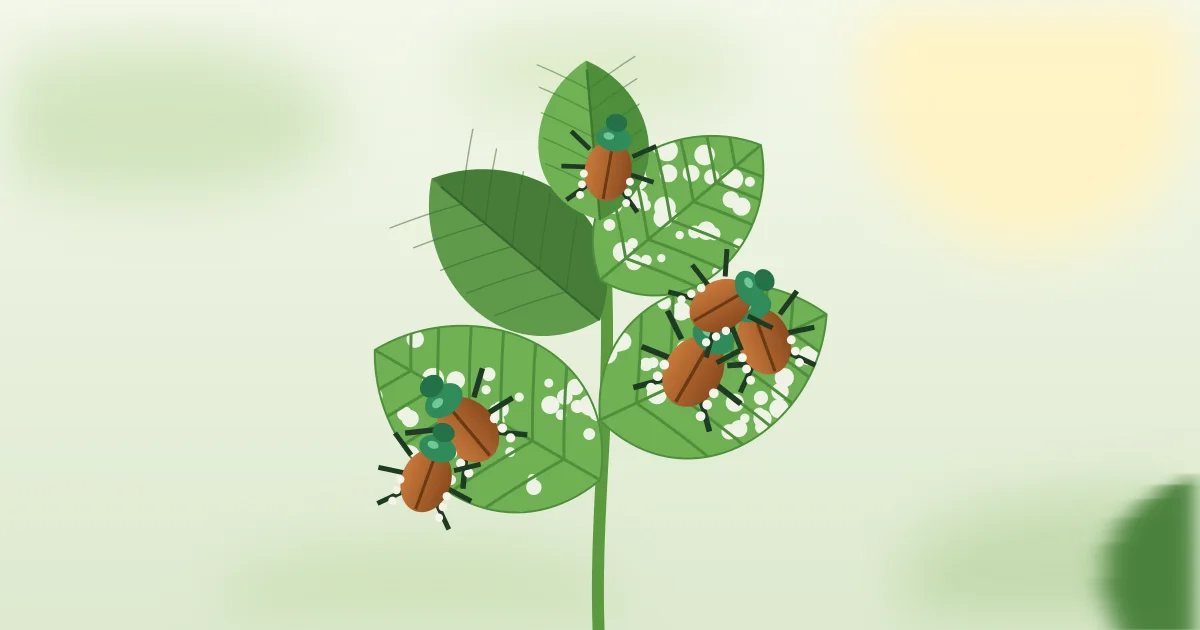
Groups of shiny, roughly half-inch beetles with metallic green bodies and copper-brown wing covers, feeding in clusters that leave leaves skeletonized - only the network of veins remains.
Could it be something else?
Likely causes
Ranked most common first.
- Grubs in nearby turf. Japanese beetle larvae live in lawn soil through fall, winter and spring, so a healthy nearby lawn is often the actual source of a summer beetle swarm.
- Aggregation pheromones. Feeding beetles release scent cues that draw in more beetles, which is why an infestation tends to snowball on the same plants once it starts.
How to fix it
- Hand-pick or shake beetles into a jar of soapy water in the early morning while they are sluggish and slow to fly - this is genuinely effective if done daily during the roughly 6-week peak.
- Skip pheromone traps in the garden itself; they draw in far more beetles than they catch and tend to increase damage to nearby plants. If you use one, place it well away from anything you are trying to protect.
- Cover especially prized plants with fine netting during the peak weeks if the swarm is heavy.
- Treat lawn grubs in late summer with beneficial nematodes or milky spore if turf grubs are a known local problem - this reduces next year's adult population rather than this year's.
Common mistakes
- Hanging pheromone traps in or next to the garden. They attract far more beetles into the area than they catch.
- Picking beetles in the afternoon, when they are warm and fly off readily. Knock them into soapy water in the cool early morning.
- Ignoring the first few. Feeding beetles release scents that draw more beetles in, so daily picking from the start keeps numbers down.
- Spraying broad-spectrum insecticide on plants in flower, which kills bees along with the beetles.
When and where it shows up
Adult Japanese beetles emerge in early summer - late June to early July across much of the eastern US - and feed for six to eight weeks. They are most common east of the Mississippi and are spreading west. Favourites include roses, grapes, raspberries and linden trees, and in the vegetable garden beans, okra, basil and the silks of sweet corn.
Preventing it next time
Because beetles are drawn to plants already being fed on, removing the first arrivals daily before a crowd builds keeps the whole infestation smaller for the rest of the season.
Questions gardeners ask
Do Japanese beetle traps work?
They catch lots of beetles but lure in even more, so plants near a trap often suffer extra damage. If you use one at all, put it well away from the garden.
Will treating my lawn for grubs stop Japanese beetles?
It helps a little over time, but adult beetles fly in from neighbouring lawns and fields, so it rarely solves the problem on its own.
How long do Japanese beetles stay each summer?
Each summer's adults feed for about six to eight weeks, then numbers drop off sharply by late summer.
Is produce from beetle-damaged plants safe to eat?
Yes. Wash it; the beetles are not harmful to people.