Watering
Bitter, curved, or oddly-shaped cucumbers
Last reviewed September 2026 · written from Cooperative Extension and university horticulture references — see how we source data
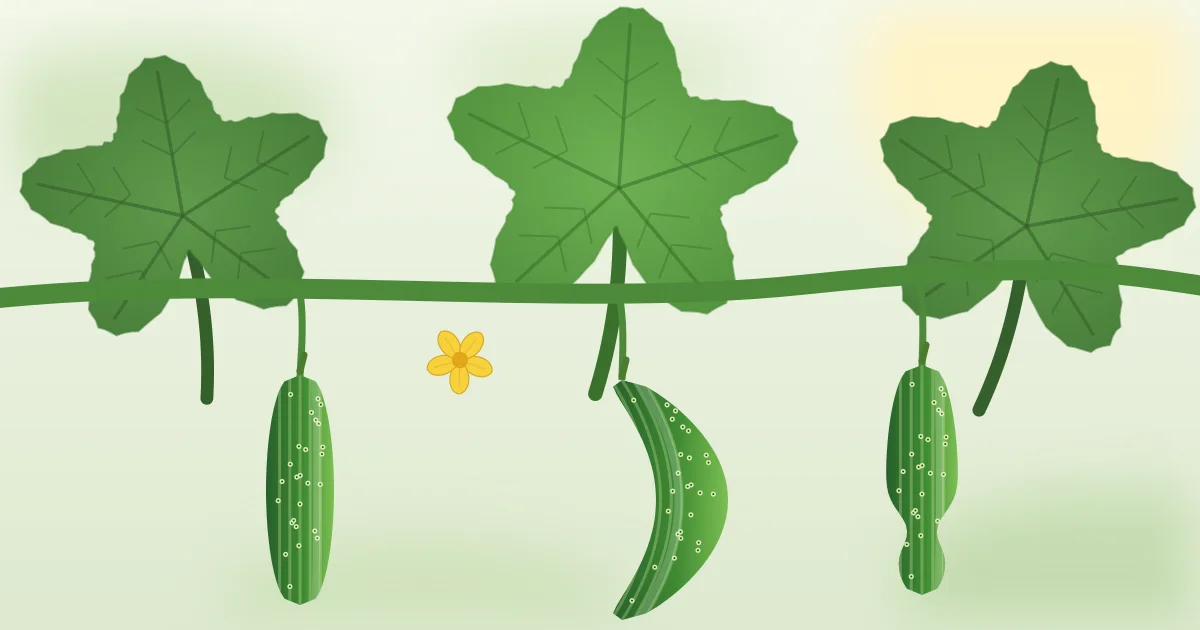
What you’re seeing
Cucumbers taste sharply bitter, especially near the stem end or in the skin, or grow visibly curved, tapered, or bulbous at one end instead of straight and uniform.
Could it be something else?
Likely causes
Ranked most common first.
- Water stress (for bitterness). Cucumbers produce bitter compounds called cucurbitacins under stress, and inconsistent watering - especially a dry spell - is the single most common trigger.
- High heat stress (for bitterness). Extended heat, independent of watering, can also raise bitterness levels, particularly in older or stressed vines.
- Incomplete pollination (for misshapen fruit). A cucumber develops from a flower with multiple pollination sites along its length; if only part of the flower gets pollinated, that section develops normally while the rest stays thin or curved.
- Variety tendency. Some varieties, especially older heirlooms, are simply more prone to bitterness or irregular shape than modern hybrids bred to minimize both.
How to fix it
- Water consistently and deeply, aiming for roughly 1-2 inches per week including rain, since steady moisture is the most effective single fix for bitterness.
- Peel cucumbers before eating if bitterness shows up mainly in the skin - much of the compound concentrates there and just under it.
- Harvest promptly at proper size rather than letting cucumbers oversize on the vine, since overmature fruit tends to be more bitter regardless of watering.
- For misshapen fruit, improve pollination with the same fixes as poor fruit set generally: hand-pollinate with a paintbrush, avoid pesticide sprays during the morning bloom window, and encourage pollinator visits nearby.
- Switch to a burpless or modern hybrid variety if bitterness is a recurring problem regardless of watering consistency.
Common mistakes
- Letting the soil dry out between waterings. Steady moisture is the main defence against bitterness.
- Letting fruit lie on the ground. Trellised cucumbers grow straighter and cleaner - see vertical gardening and trellising.
- Leaving fruit on the vine too long. Overgrown cucumbers are bitter and slow the plant down.
- Assuming the whole fruit is bitter. Taste a slice from the blossom end - often only the stem end and skin are bitter.
When and where it shows up
Bitterness shows up most during hot, dry spells in midsummer and on stressed or older vines. Heirloom slicing cucumbers are more prone than modern hybrids and burpless types. Misshapen fruit is most common early in the season and during spells with few bees.
Preventing it next time
Mulch to buffer soil moisture, water on a consistent schedule rather than letting vines dry out between waterings, and support good pollination with nearby flowers and pesticide-free mornings.
Questions gardeners ask
Are bitter cucumbers safe to eat?
Mildly bitter ones are fine once peeled and the stem end removed. The bitter compounds can upset your stomach in large amounts, so don't eat a cucumber that is intensely bitter.
Where is the bitterness concentrated?
Mostly in the skin and the stem end. Cut an inch or two off the stem end and peel - the rest is often perfectly mild.
Why are my cucumbers curved?
Usually incomplete pollination, but crowding and fruit lying on uneven ground also bend them. Trellising and good pollination give straighter fruit.
Are burpless cucumbers really less bitter?
Yes. Burpless and many modern varieties are bred to be low in the compounds that cause bitterness.