Environmental
Squash and cucumber flowers dropping without fruit forming
Last reviewed September 2026 · written from Cooperative Extension and university horticulture references — see how we source data
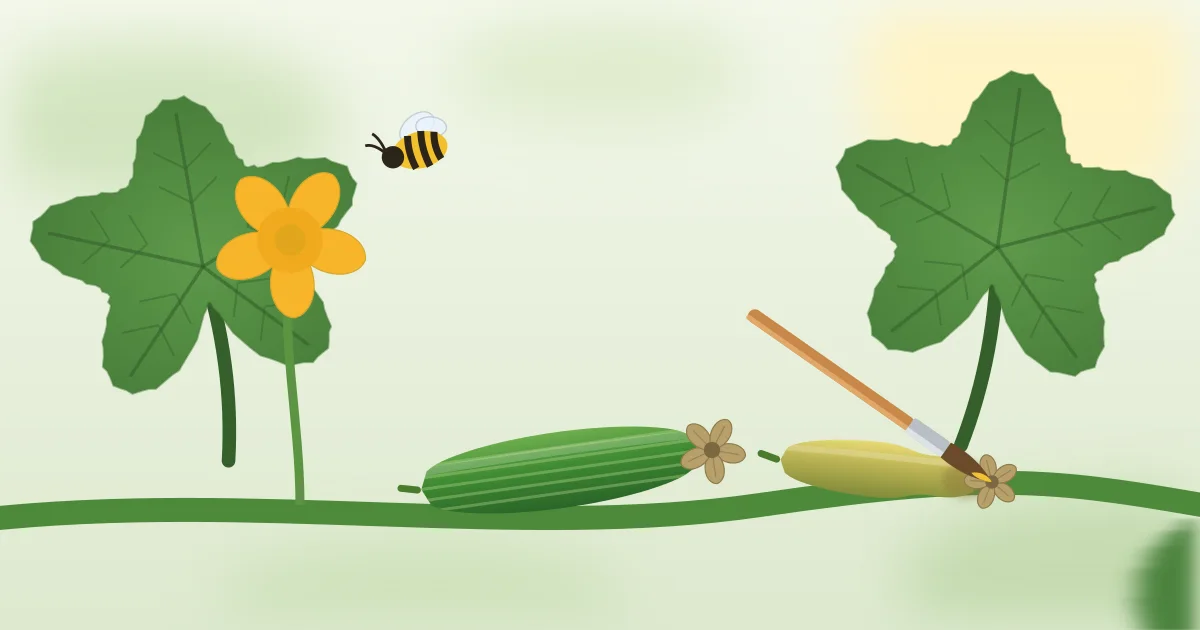
What you’re seeing
Flowers open and look normal but shrivel and drop within a day or two without any fruit developing, or tiny fruit start to form then yellow and rot at the tip before growing further.
Could it be something else?
Likely causes
Ranked most common first.
- Male flowers only, or male and female not overlapping. Squash-family plants produce separate male and female flowers, and the first flush is often all-male; female flowers (with a small swollen bulb at the base) usually follow a week or two later.
- Too few pollinators. These flowers rely almost entirely on bees moving between male and female blooms; a bee-poor period (cool, rainy, or heavy pesticide use nearby) leaves female flowers unpollinated.
- A narrow flowering window each day. Squash-family flowers typically open for pollination for only a few hours in the morning, so weather or bee activity has to line up during that specific window.
- Heat stress. Extended heat above the mid-90s°F can reduce pollen viability and cause even successfully pollinated fruit to abort partway through development.
How to fix it
- Hand-pollinate: use a small paintbrush or a picked male flower to transfer pollen directly from a male flower's center onto the center of a freshly-opened female flower in the morning.
- Identify female flowers by the small swollen bulb (the future fruit) behind the petals - if you never see any, the plant may still be in its early male-only phase and will produce females soon.
- Avoid spraying any insecticide, even an organic one, during the morning flowering window, since this is exactly when bees are visiting.
- Plant flowers such as borage, alyssum or zinnias nearby to draw in more pollinators generally.
- If small fruit are yellowing and rotting at the blossom end after starting to form, that specific pattern points to incomplete pollination rather than a nutrient problem - hand-pollination is the direct fix.
Common mistakes
- Spraying anything - even organic sprays - in the morning while flowers are open and bees are working.
- Picking off the male flowers to eat. Leave at least a few; each one can pollinate several females.
- Hand-pollinating in the afternoon. Squash flowers are only open and receptive for a few hours in the morning.
- Assuming it's a disease and pulling the plant. Most plants fix themselves once more female flowers and more bees arrive.
When and where it shows up
Poor fruit set shows up most in the first weeks of flowering, during cool or rainy spells when bees stay home, during very hot weather, and in gardens with few pollinators. Zucchini, cucumbers, pumpkins, winter squash and melons are all affected because they rely on bees to carry pollen from male to female flowers.
Preventing it next time
Plant a pollinator-friendly flower nearby, avoid pesticide sprays during the morning bloom window, and keep a small paintbrush on hand to hand-pollinate during any stretch of cool or rainy weather when bees are scarce.
Questions gardeners ask
How do I tell male and female squash flowers apart?
Female flowers have a tiny fruit at their base, right behind the petals. Male flowers sit on a long, thin stem with no swelling.
How do I hand-pollinate squash?
In the morning, pick an open male flower, peel back its petals, and dab its pollen-covered centre onto the centre of an open female flower. A small paintbrush works too.
Are there squash or cucumbers that don't need pollination?
Yes - parthenocarpic varieties set fruit without pollination. Many greenhouse cucumbers and a few zucchini varieties are bred this way.
How do I attract more bees?
Plant flowers near the squash - borage, sunflowers, zinnias and herbs left to flower all help. See attracting pollinators.