Watering
Cherries splitting open right before harvest
Last reviewed September 2026 · written from Cooperative Extension and university horticulture references — see how we source data
What you’re seeing
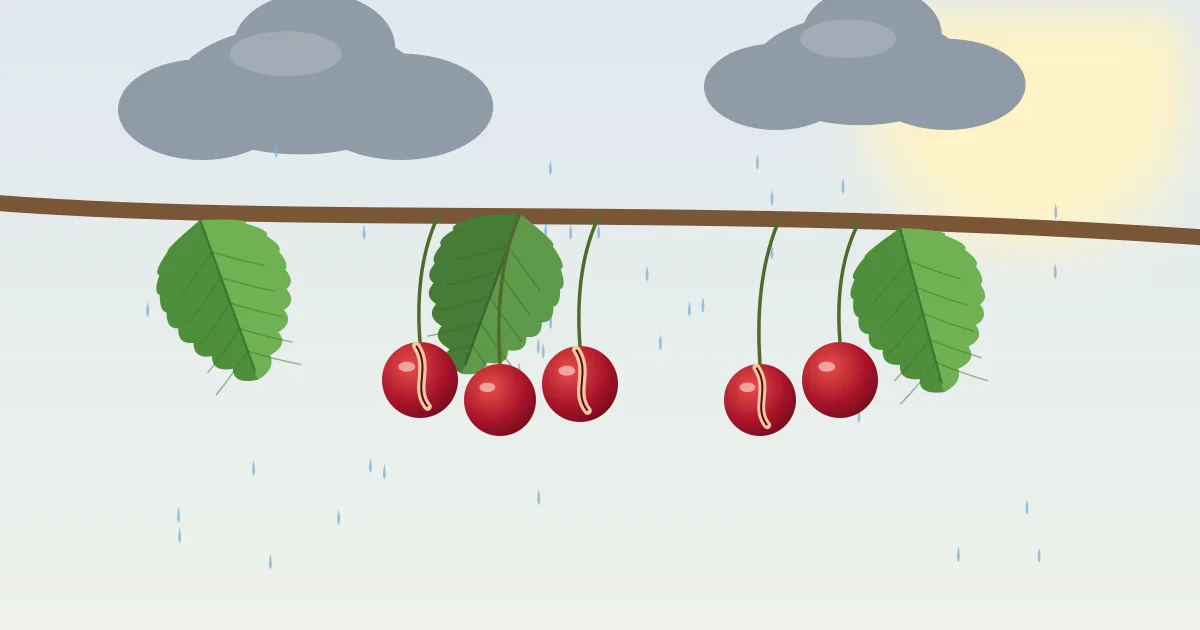
Ripe or nearly-ripe cherries develop cracks, usually radiating from the stem end or along one side, often appearing within a day of rain or heavy watering; split fruit is prone to rot soon after.
Could it be something else?
Likely causes
Ranked most common first.
- Rain (or heavy watering) right before harvest. Cherries absorb water directly through their skin as well as through the roots, and a sudden soaking right as they're ripening swells the fruit faster than the skin can stretch.
- Variety sensitivity. Some sweet cherry varieties (Bing especially) are notably more crack-prone than others; sour/tart cherries generally crack less.
- Inconsistent watering leading up to harvest. A dry spell followed by a heavy watering has the same effect as rain - a sudden swelling the skin isn't ready for.
How to fix it
- Harvest promptly once fruit is ripe rather than leaving it on the tree, since the risk window is really just the final few days before picking.
- Pick and use or process any split fruit quickly - it is still edible but rots fast once cracked.
- Keep watering consistent through the weeks leading up to harvest rather than alternating dry spells with heavy watering.
- If rain is forecast right as fruit is nearing ripeness, harvest slightly early rather than risk losing the crop to splitting - slightly underripe cherries still ripen acceptably off the tree.
Common mistakes
- Watering over the top of the tree close to harvest, which wets the fruit just like rain.
- Giving a heavy soaking after a long dry spell as the fruit ripens.
- Leaving ripe fruit on the tree 'a few more days' when rain is forecast.
- Storing split cherries with sound ones, which spreads rot.
When and where it shows up
Cracking happens in the last one to three weeks before harvest, when ripening fruit is swelling and its skin is at its most sensitive, and usually within a day of rain. Sweet cherries are much more prone than sour cherries. The same mechanism splits tomatoes - see tomato fruit cracking.
Preventing it next time
Keep irrigation consistent as harvest approaches, choose crack-resistant varieties if this is a recurring problem in a rainy climate, and pick promptly once fruit ripens.
Questions gardeners ask
Can you eat cherries that have split?
Yes, if they are fresh and show no mold. Use them the same day or freeze or cook them, as they rot quickly.
Are there crack-resistant cherry varieties?
Some sweet cherries, such as Regina and Kordia, are noted for better crack tolerance, and sour cherries crack less in general. Check catalogue ratings for your region.
Why do cherries split after rain?
Ripening cherries absorb water through their skin; the flesh swells faster than the skin can stretch, and it splits.
How can I protect cherries from rain splitting?
Keep soil moisture even in the weeks before harvest, pick promptly, and harvest a little early if heavy rain is forecast. A small tree can be covered with a rain cover or sheet held clear of the fruit.