Watering
Tomatoes splitting or cracking on the vine
Last reviewed September 2026 · written from Cooperative Extension and university horticulture references — see how we source data
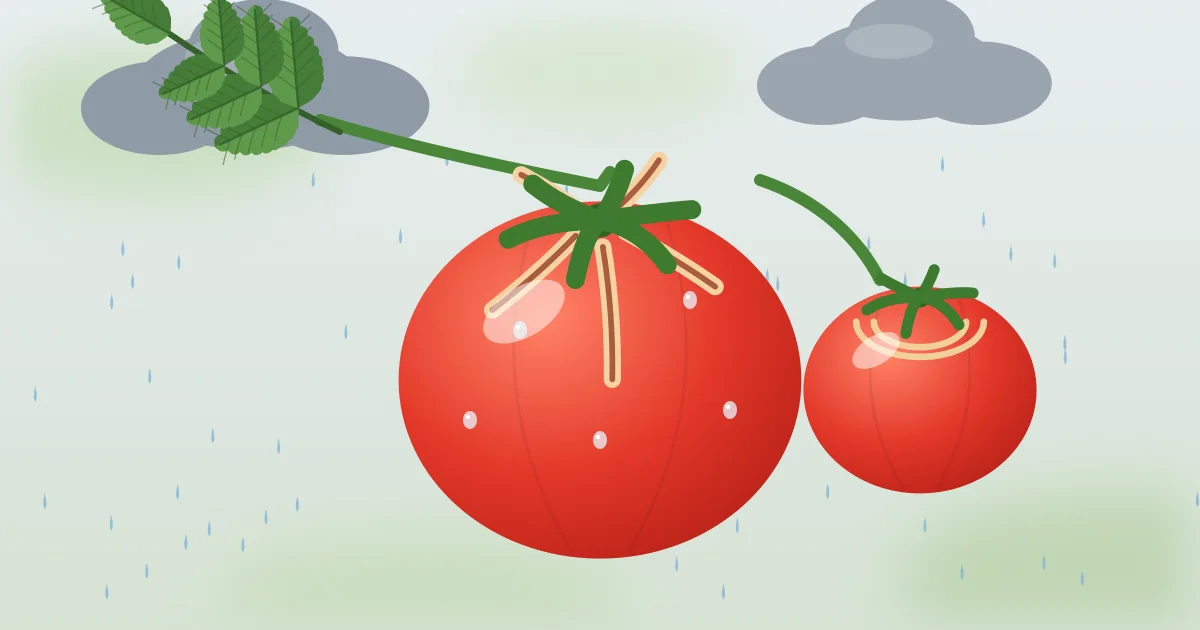
What you’re seeing
Concentric rings or radial cracks appear around the stem end of tomatoes as they ripen, sometimes splitting deeply enough to expose the flesh inside.
Could it be something else?
Likely causes
Ranked most common first.
- A sudden heavy watering or rain after a dry spell. A tomato that has grown a firm skin during dry conditions takes up water fast after a soaking rain or deep watering, and the flesh swells faster than the skin can stretch.
- Irregular watering generally. Even without a dramatic dry-then-wet swing, inconsistent watering week to week makes cracking more likely than a steady schedule does.
- Certain varieties are simply more prone to it. Thin-skinned and some heirloom varieties crack far more readily than thick-skinned hybrids bred partly for shipping durability.
How to fix it
- Pick cracked fruit promptly, even if not fully ripe - cracks are an open door for rot and fruit flies, and the tomato ripens fine indoors on a counter.
- Water deeply and consistently on a regular schedule (roughly 1-2 inches per week including rain) rather than letting soil dry out between waterings.
- Mulch around plants to buffer soil moisture swings between waterings and rain events.
- During a stretch of dry weather followed by forecast heavy rain, give plants a moderate drink beforehand rather than letting them hit the rain already parched.
Common mistakes
- Watering heavily and infrequently. Deep watering on a steady schedule is fine; long dry gaps followed by a soaking are the problem - see watering a vegetable garden.
- Leaving ripe fruit on the vine before a forecast storm. Pick at first blush and ripen indoors.
- Skipping mulch. A layer of straw or shredded leaves smooths out moisture swings - see mulching a vegetable garden.
- Heavy pruning right before a heat wave, which exposes fruit and adds stress.
When and where it shows up
Cracking is most common in mid to late summer, especially when heavy rain follows a dry spell. Large heirloom and beefsteak tomatoes crack most, but cherry tomatoes can split badly overnight after a storm. Fruit at or near full ripeness is most at risk because the skin has stopped stretching.
Preventing it next time
Keep soil moisture even with regular deep watering and a good mulch layer, and choose crack-resistant varieties if this is a recurring problem in a climate with unpredictable rain.
Questions gardeners ask
Are cracked tomatoes safe to eat?
Yes, if the cracks are fresh and there's no mold or sour smell. Use them within a day or two, cutting away the cracked part if it has started to dry or darken.
Can I pick tomatoes early to avoid cracking?
Yes. Tomatoes picked at the breaker stage - when they first show colour - ripen fully indoors with the same flavour.
Are some varieties crack-resistant?
Yes. Many hybrids are listed as crack-resistant on the seed packet. Thin-skinned heirlooms and some cherry types are the most prone.
Does drip irrigation help?
Yes. Drip gives steady moisture at the roots, which reduces the swings that cause splitting - see drip irrigation basics.