Disease
Blackened, scorched-looking branch tips on apple or pear
Last reviewed September 2026 · written from Cooperative Extension and university horticulture references — see how we source data
What you’re seeing
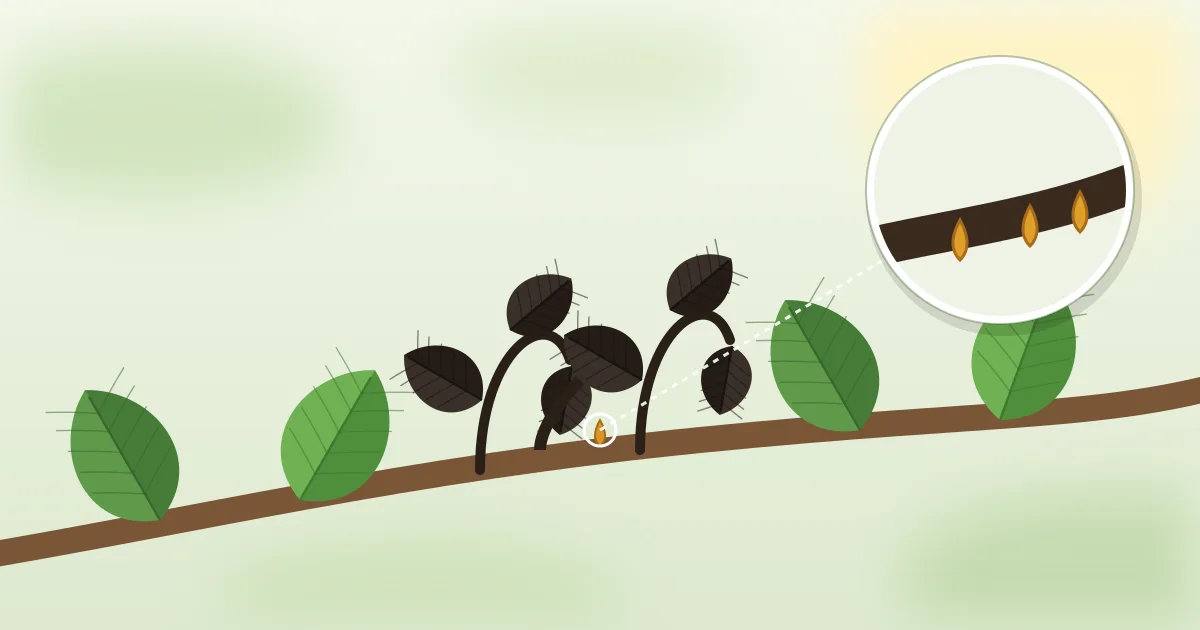
New shoots wilt suddenly, blacken, and curl over into a distinctive "shepherd's crook" shape, looking scorched as if by fire; the blackened tissue can spread down into older wood if not removed.
Could it be something else?
Likely causes
Ranked most common first.
- Erwinia amylovora bacteria. This bacterium enters through blossoms or fresh wounds, usually during a warm, wet, or humid bloom period, and spreads rapidly through the tree's vascular tissue from there.
- Warm, humid bloom-time weather. Infection risk is highest when temperatures are above about 65°F during flowering with rain, dew, or high humidity present.
- Overly vigorous, nitrogen-fed growth. Soft, fast-growing shoots (often from heavy nitrogen fertilizing or hard pruning) are more susceptible and let the infection spread faster once established.
How to fix it
- Prune out infected shoots as soon as you see them, cutting at least 8-12 inches below the visible blackened tissue into clean wood, since the bacteria travel further inside the branch than the visible symptom shows.
- Disinfect pruning tools with rubbing alcohol or a bleach solution between every single cut - this disease spreads easily on blades and one dirty cut can reinfect a tree you just cleaned up.
- Prune on a dry day, not during or right after rain, since wet conditions help the bacteria spread from cut surfaces.
- Remove and destroy prunings away from the orchard rather than composting them.
- Avoid heavy nitrogen fertilizer and hard dormant pruning, both of which push exactly the soft, vigorous growth fire blight favors.
Common mistakes
- Cutting just below the visible damage. The bacteria are already further down - cut 8-12 inches into healthy wood.
- Skipping tool disinfection between cuts, which spreads the bacteria to every branch you prune.
- Pruning in wet weather, when the bacteria spread most easily.
- Feeding with high-nitrogen fertilizer, which produces the soft, fast shoots fire blight infects most easily.
When and where it shows up
Most infection happens during bloom in warm, humid or rainy weather - above about 65°F - when bees and rain carry the bacteria from flower to flower. Shoot blight follows in late spring and early summer on fast-growing shoots, and in humid weather infected tissue may weep droplets of amber ooze. Pears are the most susceptible, then Asian pears, apples, quince and crabapples.
Preventing it next time
Choose fire-blight-resistant varieties and rootstocks where this disease is a known local problem, avoid heavy nitrogen feeding, and inspect trees regularly during and after bloom so any infection is caught and cut out early.
Questions gardeners ask
Can a tree recover from fire blight?
Usually, if infections are cut out promptly and the trunk and rootstock are not infected. A canker that reaches the main trunk is much more serious and can kill young trees.
Which apples and pears resist fire blight?
Resistance varies a lot. Many modern pear varieties and some apples, such as Liberty and Enterprise, are much less susceptible than older types - check catalogue ratings before planting.
Is fruit from a tree with fire blight safe to eat?
Yes. Fire blight does not affect people. Infected fruitlets shrivel and turn black, but sound fruit is fine.
Do copper sprays prevent fire blight?
A copper spray at green tip, before bloom, reduces overwintering bacteria on the bark. Later sprays can mark the fruit, so follow the label and combine it with pruning.