Disease
Strawberries rotting with a fuzzy gray coating
Last reviewed September 2026 · written from Cooperative Extension and university horticulture references — see how we source data
What you’re seeing
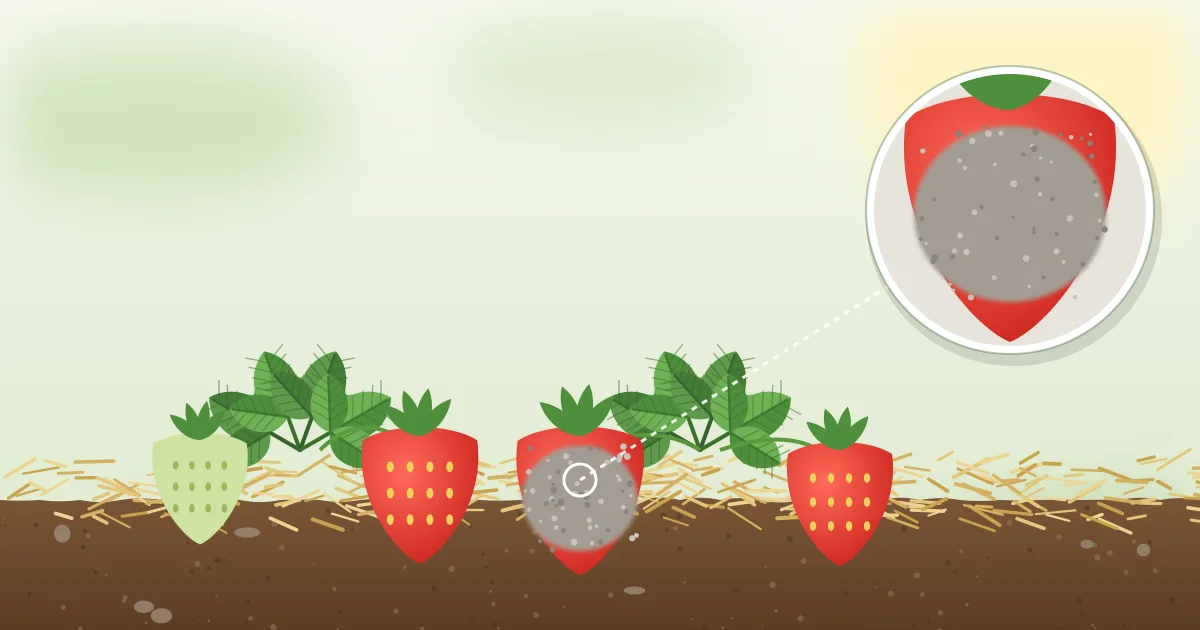
Ripening or ripe berries develop a soft brown, watery patch that quickly spreads across the fruit and grows a fuzzy gray-brown mold coating, often starting where a berry touches the soil, mulch, or another berry.
Could it be something else?
Likely causes
Ranked most common first.
- Botrytis cinerea fungus favoring cool, damp, humid conditions. This very common fungus thrives in exactly the cool, damp spring weather that coincides with strawberry fruiting in many regions, and spreads fast between touching or crowded berries.
- Fruit touching the soil. Berries resting directly on wet soil pick up both moisture and fungal spores far more readily than berries held up off the ground.
- Dense, crowded plantings. Thick foliage and crowded plants trap humidity around the fruit and slow drying after rain or dew.
How to fix it
- Pick ripe and overripe berries promptly, every day or two during the peak of the season, since fruit left to sit is exactly what gray mold needs to establish and spread.
- Remove and destroy any moldy berries immediately, rather than leaving them in the patch where spores can spread to healthy neighboring fruit.
- Mulch under the plants with straw so berries rest on dry material instead of bare soil (this is literally where "strawberry" comes from historically).
- Thin overcrowded plants and remove excess runners so air can move freely around the remaining foliage and fruit.
- Water at the base of plants in the morning rather than overhead in the evening, so foliage and fruit aren't sitting wet overnight.
Common mistakes
- Leaving rotten berries in the bed. Each one releases huge numbers of spores onto the healthy fruit.
- Watering overhead in the evening, which keeps flowers and fruit wet overnight.
- Feeding heavily with nitrogen in spring, which produces dense, lush leaves that trap humidity.
- Never renovating the bed after harvest, so plants and runners become a crowded mat.
When and where it shows up
Gray mold infects the flowers during cool, wet weather at bloom and then rots berries as they ripen, especially during long rainy spells. June-bearing strawberries fruiting in a wet late spring are hit hardest, and dense, overgrown beds suffer most. The same fungus attacks raspberries, grapes and many other plants.
Preventing it next time
Straw mulch under the fruit, good plant spacing for airflow, and picking ripe berries promptly together prevent most gray mold without any spray at all.
Questions gardeners ask
Is it safe to eat strawberries next to a moldy one?
Discard the moldy berry. Firm berries that were touching it are usually fine if washed and eaten soon, but they will mold quickly in storage.
Why do strawberries go moldy so fast in the fridge?
The mold often starts on the plant before any sign shows. Pick dry berries, refrigerate them unwashed, and wash only right before eating.
Does straw mulch really help?
Yes. It keeps berries off wet soil and stops rain splashing spores and soil onto the fruit.
How often should I pick strawberries?
Every day or two in peak season. Overripe berries left on the plant are the first to mold.