Pest
Slugs and snails eating seedlings overnight
Last reviewed September 2026 · written from Cooperative Extension and university horticulture references — see how we source data
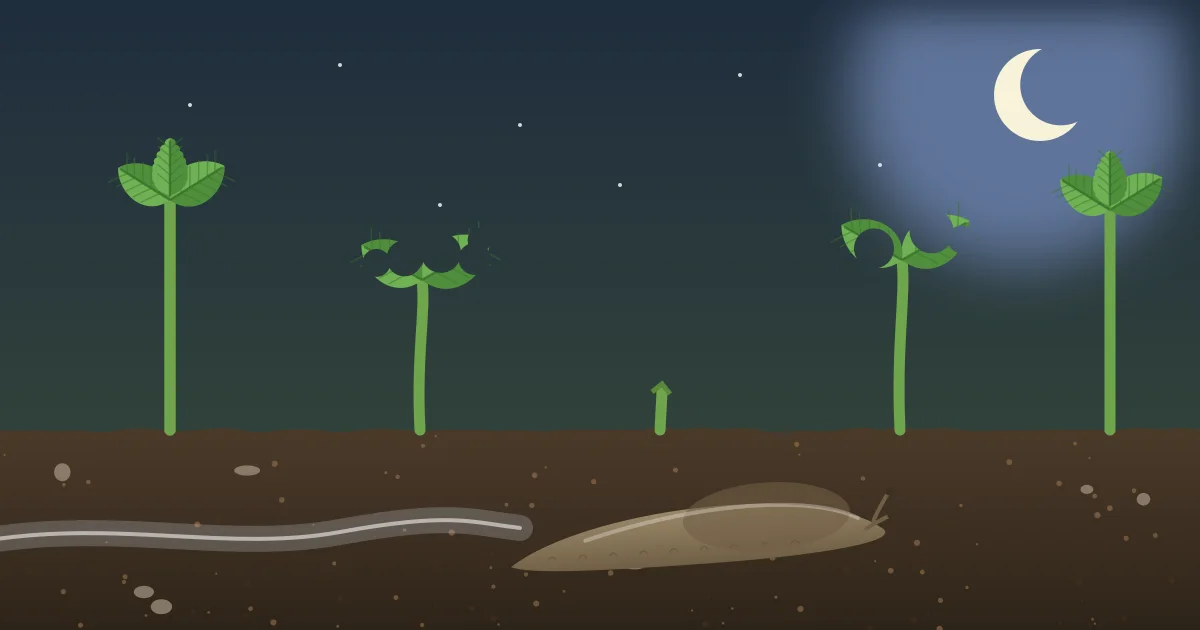
What you’re seeing
Seedlings that were fine yesterday are chewed down to stubs or gone entirely by morning, with irregular holes in the remaining leaves and a silvery slime trail somewhere nearby.
Could it be something else?
Likely causes
Ranked most common first.
- Damp, sheltered conditions. Slugs and snails need moisture to move and feed; mulch, dense groundcover and overwatering all create the humid micro-habitat they thrive in.
- Tender new transplants. Just-transplanted seedlings have soft tissue and no size to shrug off damage, so even light slug feeding can kill them outright.
- Evening watering. Watering in the evening leaves foliage and soil wet through the night, exactly when slugs are most active.
How to fix it
- Go out after dark with a flashlight - this is the single most reliable way to confirm slugs and start physically removing them by hand into a bucket of soapy water.
- Set a beer trap (a shallow dish of beer sunk to soil level) or a damp board laid flat near seedlings; check under it each morning and remove what has gathered.
- Ring vulnerable seedlings with a barrier they will not cross: crushed eggshell, diatomaceous earth (reapply after rain), or copper tape around a raised bed edge.
- Switch to iron phosphate slug bait if you need something more aggressive - it is far less toxic to pets and wildlife than older metaldehyde baits and still works well.
- Water in the morning instead of the evening so the soil surface has dried out by the time slugs become active at dusk.
Common mistakes
- Watering in the evening. Wet soil and leaves overnight is exactly when and where slugs feed - switch to morning watering.
- Using old metaldehyde pellets. They're toxic to pets and wildlife; iron phosphate baits work well and are far safer.
- Setting beer traps with the rim flush to the soil. Leave the rim about half an inch above ground so beetles and other helpful insects don't fall in.
- Mulching tight against seedling stems. Pull mulch back a couple of inches until plants are bigger and tougher.
When and where it shows up
Slug damage peaks in cool, damp weather in spring and fall, and after any run of rain. It's worst in beds edged with boards, stones or thick mulch, where slugs hide in the day. Young lettuce, beans, cabbage and other brassicas, and strawberries are favourites. The damage happens overnight, so a seedling that was fine at dusk can be gone by breakfast.
Preventing it next time
Water early in the day, keep mulch pulled a couple of inches back from seedling stems, and protect the most vulnerable young transplants with a cut plastic bottle collar for their first two to three weeks in the ground.
Questions gardeners ask
Do beer traps really work?
Yes - slugs are drawn to the yeast and drown. Empty and refill them every couple of days. They catch a lot, but they can also attract slugs from next door, so combine them with hand-picking.
Do crushed eggshells keep slugs away?
The evidence is weak. They may slow slugs a little when dry and sharp, but once wet they barely work. Copper tape or a physical collar is more reliable.
Is iron phosphate bait safe around pets?
It's much safer than older metaldehyde baits and breaks down into nutrients plants can use. Still follow the label and keep the package away from pets.
When is the best time to go slug hunting?
About an hour after dark, especially after rain or watering. A flashlight and a jar of soapy water is still one of the most effective controls.