Environmental
Leggy, pale, floppy seedlings: what causes it and whether they can be saved
Last reviewed September 2026 · written from Cooperative Extension and university horticulture references — see how we source data
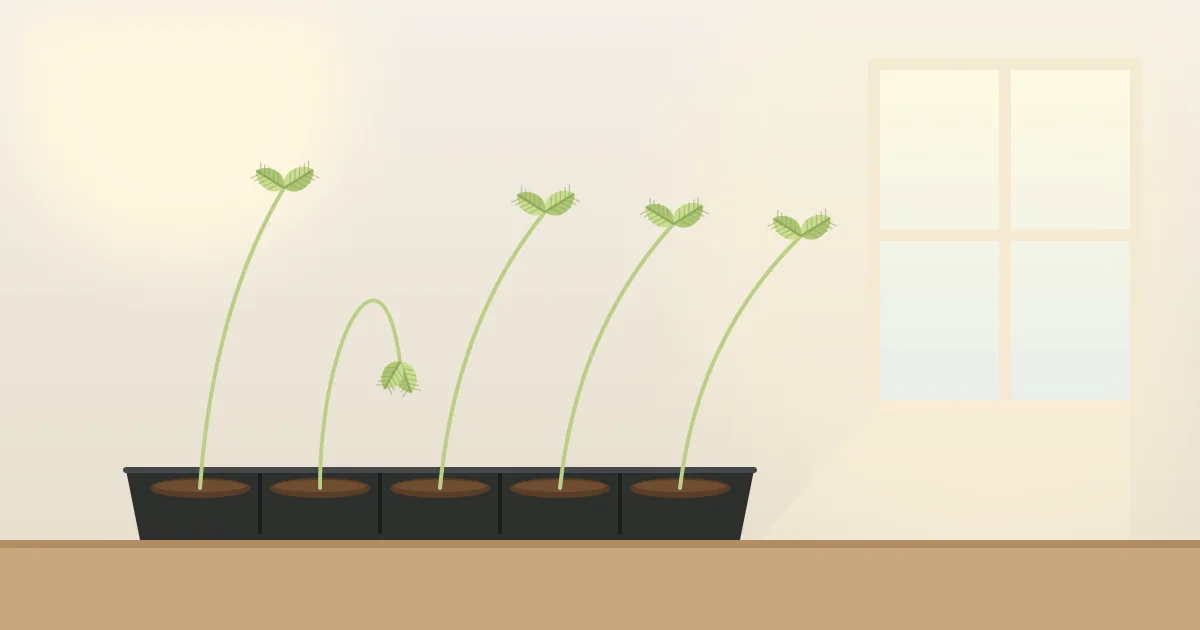
What you’re seeing
Seedlings grow unusually tall and thin, with pale color and long gaps between leaf sets, and often flop over under their own weight or lean hard toward a window or light source.
Could it be something else?
Likely causes
Ranked most common first.
- Not enough light. This is by far the most common cause - a windowsill provides only a fraction of the light intensity seedlings need, and they stretch upward searching for more.
- Light too far away. Even a good grow light loses most of its useful intensity within a foot or two of distance; seedlings kept too far below a light stretch just as much as ones with no supplemental light at all.
- Too warm relative to light. Warm temperatures push faster stem growth; without matching bright light, that growth comes out as stretched, pale stem rather than sturdy tissue.
- Overcrowding. Seedlings sown too thickly shade each other and each one stretches to compete for the light that reaches the top of the canopy.
How to fix it
- Move seedlings under a grow light kept just 2-4 inches above the leaf tops (raise the light as they grow), or to the brightest possible window, immediately - every extra day under low light adds more stretch.
- Thin overcrowded seedlings to give remaining ones breathing room and direct light rather than shade from neighbors.
- For tomato and a few other crops, bury the leggy stem deeper when transplanting (tomatoes readily root along a buried stem), which effectively hides moderate legginess underground.
- Run a small fan on low for a couple of hours a day; the light breeze triggers seedlings to grow stockier, sturdier stems.
- Accept that severely leggy, thin-stemmed seedlings that have already flopped over rarely fully recover strength - if there's time, it is often faster to start a fresh batch under better light than nurse a badly stretched one along.
Common mistakes
- Keeping grow lights a foot or more above the seedlings. Most LED shop lights need to be a few inches away - follow the manufacturer's guidance and raise the light as plants grow.
- Running lights for only a few hours. Seedlings generally need about 14-16 hours of light a day.
- Keeping trays in a very warm room with weak light. Warmth pushes stem growth that the light can't support.
- Starting seeds too early. Seedlings held indoors too long get leggy and root-bound before it's warm enough to plant out.
When and where it shows up
Legginess is almost entirely an indoor problem, in seed trays started on windowsills in late winter and early spring when days are short and the sun is low. Fast growers like tomatoes, brassicas such as broccoli, lettuce and basil stretch the quickest. Use the seed starting calculator so seedlings aren't started so early they spend weeks indoors in poor light.
Preventing it next time
Use a grow light positioned close to the seedlings from day one, keep temperatures moderate rather than very warm, and thin seedlings early rather than letting them compete for light.
Questions gardeners ask
Can I just plant leggy tomatoes deeper?
Yes. Tomatoes grow roots along any buried stem, so plant them up to the first set of true leaves. This doesn't work for most other crops.
How close should grow lights be?
For typical LED shop lights, a few inches above the leaves. Stronger lights need more distance - check the maker's recommendation and watch for pale or bleached leaves, which mean too close.
Does a fan really help?
Yes. A gentle breeze for a few hours a day makes stems thicker and sturdier, and it also helps prevent damping off.
Should I pinch leggy seedlings?
Generally no. Pinching works for a few crops like basil, but for most seedlings it just sets them back. Fix the light instead.