Cultural / care
Seeds that never sprout: the most common reasons
Last reviewed September 2026 · written from Cooperative Extension and university horticulture references — see how we source data
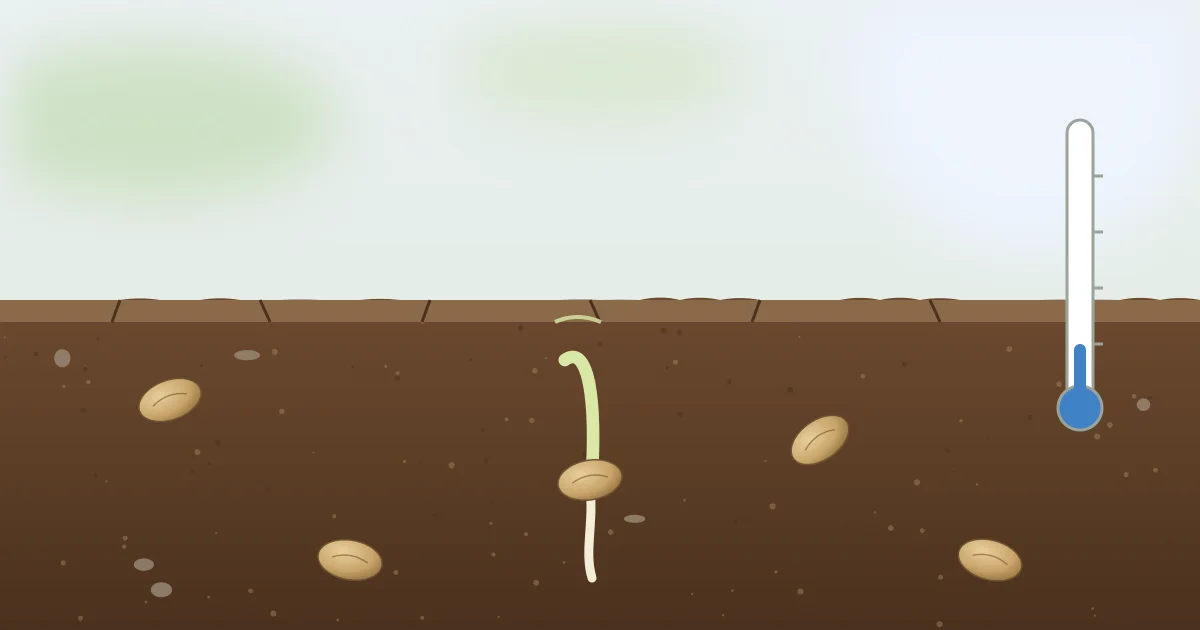
What you’re seeing
No seedlings emerge at all within the expected timeframe for the crop, or only a small fraction of what was sown comes up.
Could it be something else?
Likely causes
Ranked most common first.
- Soil too cold. Every crop has a minimum soil temperature for germination - warm-season crops like tomatoes and peppers often will not germinate at all below about 60°F, regardless of how long you wait.
- Planted too deep (or too shallow). Small seeds sown too deep may exhaust their stored energy before reaching the surface; seeds that need darkness to germinate but were left exposed, or light-needing seeds buried too deep, also fail.
- Soil too dry or inconsistently moist. A seed that starts absorbing water and then dries out partway through germination often dies rather than pausing and resuming later.
- Soil crusting over. Fine-textured soil that dries into a hard crust on the surface can physically prevent a small, weak seedling from pushing through, even though it germinated underneath.
- Old or improperly stored seed. Seed viability drops with age and is shortened considerably by heat and humidity in storage; some crops (onion, parsnip, spinach) lose viability faster than others (tomato, cucumber) even under good storage.
- Seeds eaten or moved by pests. Birds, rodents, and sometimes ants can remove seed from soil before it ever gets the chance to germinate, particularly with larger seeds like beans and corn.
How to fix it
- Check soil temperature with an inexpensive soil thermometer before resowing - waiting for the right temperature window is usually faster than repeatedly resowing into soil that is still too cold.
- Keep the seedbed consistently moist (not soggy) from sowing until emergence; a light daily misting or watering is often needed since the top inch of soil dries out fastest.
- Break up any surface crust gently with a fingertip or the back of a rake right after sowing, especially in silty or clay-heavy soil.
- Do a simple viability check on questionable old seed: roll 10 seeds in a damp paper towel inside a plastic bag for the crop's normal germination window, and count how many sprout.
- Cover freshly sown seed with row cover or netting if birds or rodents are a known problem in your garden.
- Resow if nothing has emerged well past the crop's expected germination window - there is no benefit to waiting indefinitely once conditions have been right for that long.
Common mistakes
- Sowing tiny seeds too deep. A good rule of thumb is two to three times the seed's width.
- Letting the surface dry out, even for an afternoon. Small seeds near the surface need steady moisture until they emerge.
- Sowing warm-season crops like beans and squash into cold soil. They often rot rather than sprout.
- Using old seed without testing it. Try the paper-towel test before sowing a whole row.
When and where it shows up
Poor germination is most common in early spring, when seeds are sown into soil that's still too cold, and in hot, dry late-summer sowings where the surface dries out. Slow germinators like carrots and parsnips can take two to three weeks even in good conditions - check the typical germination time on each crop page before giving up. Your planting calendar shows when soil is usually warm enough for each crop.
Preventing it next time
Check the crop's minimum germination soil temperature and sowing depth before planting, keep the seedbed evenly moist until emergence, and buy fresh seed each year for varieties known to lose viability quickly.
Questions gardeners ask
How deep should I plant seeds?
About two to three times the seed's width. Very fine seeds like lettuce are barely covered, while beans go about an inch deep.
How long do seeds stay viable?
It varies. Onion, parsnip and spinach seed often lose vigour after one to two years, while tomato and cucumber seed can last four to six years if stored cool and dry.
Should I soak seeds before sowing?
Large, hard seeds such as peas, beans and beets can benefit from a few hours' soak. Don't soak tiny seeds, and don't soak beans overnight - they can crack.
How can I stop a crust forming on the soil?
Cover the seed row with a thin layer of fine compost or vermiculite instead of heavy soil, and keep it lightly moist.