Pest
Silvery streaks and white patches on onion leaves
Last reviewed September 2026 · written from Cooperative Extension and university horticulture references — see how we source data
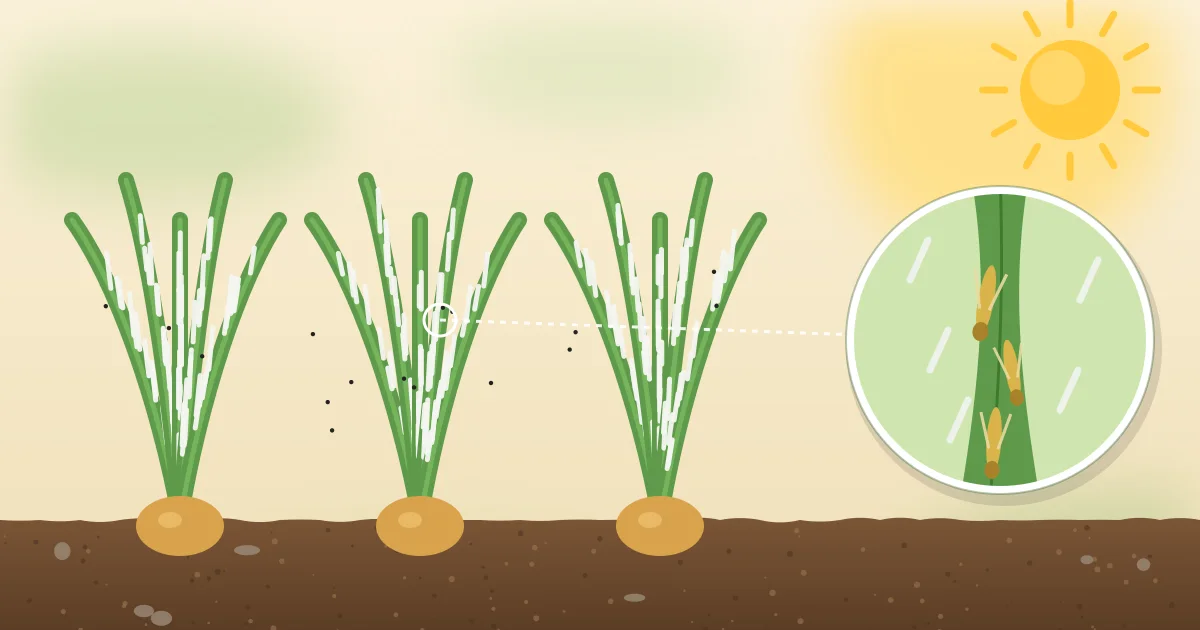
What you’re seeing
Leaves develop silvery-white streaks and blotches, sometimes with small black flecks (thrips droppings) visible on close inspection, and heavily affected leaves may curl, yellow, or die back early from the tip.
Could it be something else?
Likely causes
Ranked most common first.
- Onion thrips. These tiny (barely visible) slender insects feed by rasping the leaf surface and sucking the sap that escapes, which is what leaves the characteristic silvery scarring.
- Hot, dry weather. Thrips populations explode fastest in hot, dry conditions and are naturally suppressed by heavy rain, which washes them off leaves and favors fungal diseases that infect them.
- Nearby infested plantings. Thrips move easily between onions, garlic, and leeks, and also feed on many other crops, so pressure can build from anywhere nearby.
How to fix it
- Spray a strong jet of water on the foliage every few days during a hot, dry stretch - this alone meaningfully knocks back thrips numbers.
- Apply insecticidal soap directly onto affected leaves, getting into the leaf folds where thrips shelter, since contact is required for it to work.
- Keep the planting consistently watered through a dry spell, since drought-stressed onions are both more attractive to thrips and less able to tolerate the damage.
- Remove heavily infested, dying leaves to reduce the local thrips population, though onions naturally have some older leaf dieback regardless.
- Accept mild thrips damage on an otherwise healthy crop - bulb size may be modestly reduced but the crop is still usable.
Common mistakes
- Spraying a broad-spectrum insecticide, which kills the minute pirate bugs and other predators that keep thrips in check.
- Letting onions go short of water in a hot spell - drought-stressed plants suffer far more damage.
- Only checking the outside of the leaves. Thrips sit in the tight folds where the leaves meet.
- Leaving onion debris and weedy margins over winter, where thrips survive until spring.
When and where it shows up
Onion thrips peak in hot, dry weather in midsummer, when their numbers can explode in a week or two. They hide deep in the leaf folds where sprays and rain miss them. Onions, garlic and leeks suffer most, and thrips also feed on cabbage and beans.
Preventing it next time
Keep onions well watered during hot weather, avoid planting right next to last year's onion or garlic bed, and hose off foliage periodically during a dry summer stretch.
Questions gardeners ask
What do onion thrips look like?
Tiny - about a sixteenth of an inch - slender, pale yellow to brown insects. Peel back the inner leaves and look in the folds; a hand lens helps.
Do thrips damage the onion bulbs?
Not directly, but heavy feeding cuts the leaf area, so bulbs end up smaller. Mild damage on a well-watered crop rarely matters much.
Are onions with thrips damage safe to eat?
Yes. Thrips damage the leaves; the bulbs are fine to eat.
How do onion thrips survive the winter?
In onion debris, weeds and nearby plants. Clearing old onion leaves after harvest and keeping margins weeded reduces next year's numbers.