Nutrient
Onions and garlic with small bulbs or no bulbs at all
Last reviewed September 2026 · written from Cooperative Extension and university horticulture references — see how we source data
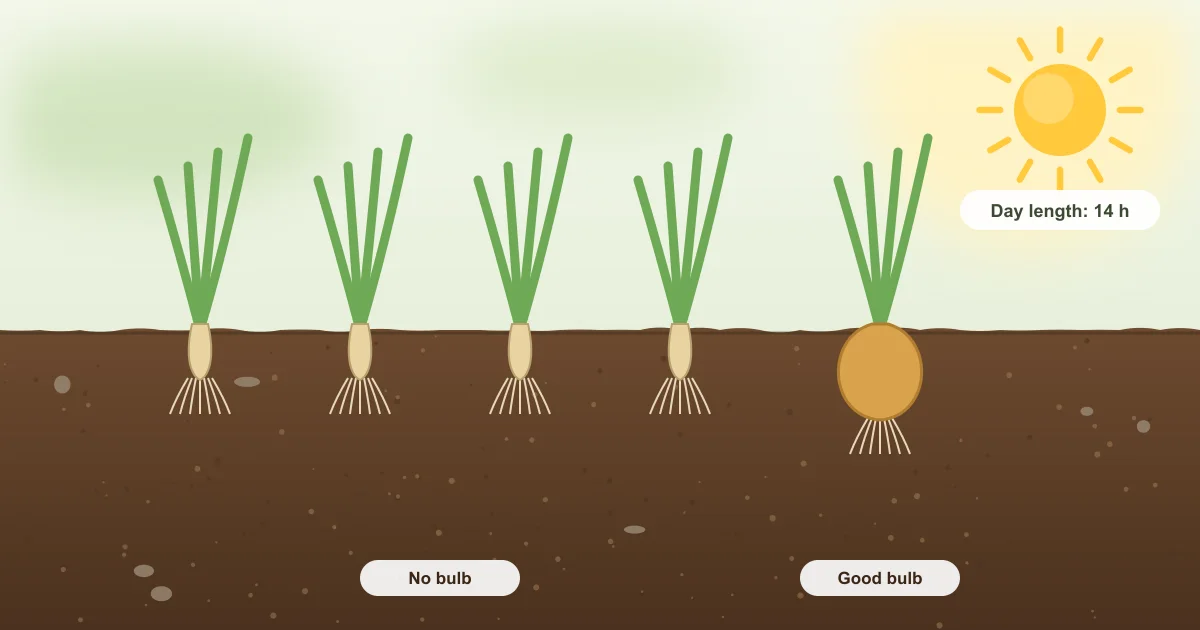
What you’re seeing
Onion plants produce healthy green tops but the bulb underground stays thin and small, or barely forms at all; garlic similarly may produce a plant but the harvested bulb has few or undersized cloves.
Could it be something else?
Likely causes
Ranked most common first.
- Wrong day-length type for your latitude (onions). Onions bulb in response to day length, and short-day varieties grown too far north (or long-day varieties grown too far south) will grow lush tops but bulb poorly or not at all.
- Planted too late. Both onions and garlic need a substantial period of leaf growth before bulbing starts; planted too late in spring, they run out of growing season before bulbs can size up.
- Overcrowding. Onions and garlic both need real spacing (typically 4-6 inches) to bulb to full size; crowded plants compete and stay small.
- Not enough nitrogen early, or too much nitrogen late. Both crops need good nitrogen during their leaf-growth phase but should have it tapered off once bulbing begins, since late nitrogen can delay or disrupt bulb formation.
- Garlic not vernalized (chilled). Garlic needs a period of cold (typically below 40°F for several weeks) to trigger clove division; garlic planted too late or grown somewhere too mild for enough chilling produces a single rounded bulb with no distinct cloves.
How to fix it
- Check that you planted the right day-length type of onion for your latitude - short-day varieties for the southern half of the US, long-day for the north, and intermediate-day for the band in between.
- Thin crowded onion or garlic rows to proper spacing as early as possible; bulbs already stunted by crowding will not catch up later in the season.
- Stop applying nitrogen fertilizer once bulbing visibly begins (tops start to flop for onions; scapes appear on hardneck garlic) and switch focus to consistent watering instead.
- For garlic that never divided into cloves, plant earlier in fall next time so it gets a full cold winter period before spring growth starts.
- Harvest onions once about half the tops have fallen over on their own, rather than leaving them in hoping for more size - bulbs stop enlarging once tops begin to senesce regardless.
Common mistakes
- Planting onion sets or transplants late in spring, leaving little time to grow leaves before bulbing starts.
- Planting garlic in spring without a cold period. It often forms 'rounds' - single, undivided bulbs.
- Letting weeds grow. Onions have thin, upright leaves, cast little shade and compete poorly.
- Bending over onion tops to 'speed up' bulbing. It can let disease in; let the tops fall over on their own.
When and where it shows up
Onions start forming bulbs when the day length reaches a threshold set by the variety - roughly 10-12 hours for short-day types, 12-14 for intermediate and 14-16 for long-day types. Long-day onions suit northern gardens and short-day onions the South. Bulb size depends on how many leaves the plant built before that trigger. Garlic needs several weeks of winter cold, below about 40°F, to divide into cloves.
Preventing it next time
Choose the correct day-length onion type for your latitude, space both crops properly from the start, plant garlic in fall with enough lead time before winter, and taper nitrogen once bulbing begins.
Questions gardeners ask
What is a short-day onion?
A variety that starts forming a bulb when days reach about 10-12 hours long. Short-day onions suit southern gardens, where they are planted in fall or winter. In the North they bulb too early and stay small; choose long-day varieties there.
Can I plant garlic from the grocery store?
It may grow, but supermarket garlic is often a variety suited to a different climate and is sometimes treated to stop sprouting. Seed garlic from a local supplier gives much more reliable bulbs.
Why did my garlic not form cloves?
Usually not enough winter cold, or it was planted too late. Those single rounds can be replanted in fall and will usually divide into a full bulb the following year.
When should I harvest onions and garlic?
Onions when about half the tops have fallen over on their own. Garlic when the lower third of the leaves have turned brown but the upper leaves are still green.