Pest
Raspberry and blackberry canes wilting, dying back, or breaking
Last reviewed September 2026 · written from Cooperative Extension and university horticulture references — see how we source data
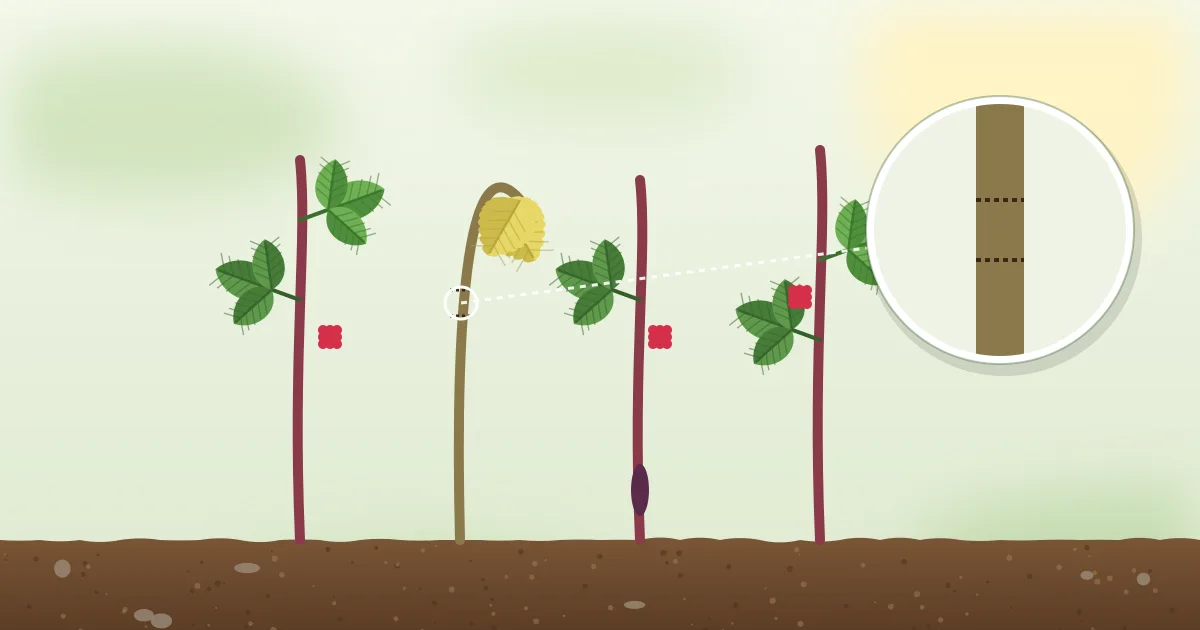
What you’re seeing
A single cane wilts and dies from the tip downward while neighboring canes stay healthy, sometimes with a small swelling or two rings of puncture marks a few inches below the wilted tip, or canes develop dark purple-brown lesions near the base and snap easily in wind.
Could it be something else?
Likely causes
Ranked most common first.
- Raspberry cane borer. A small beetle girdles the cane tip with two rings of punctures before laying an egg between them; the tip wilts and dies above the rings, and the larva tunnels down into the cane over the following weeks.
- Cane blight or spur blight (fungal). These fungi enter through wounds (often where old fruiting canes were cut) and cause dark, brittle lesions that weaken the cane, making it snap easily and eventually killing it.
- Overcrowded, unthinned canes. A dense thicket of canes stays humid inside and makes both pest and disease problems worse, as well as making early symptoms hard to spot.
How to fix it
- For cane borer damage, cut the wilted tip off a few inches below the two puncture rings and destroy it - this removes the egg or young larva before it tunnels further down the cane.
- For cane blight or spur blight, cut out and destroy the entire affected cane at ground level rather than just the visibly damaged section, since the fungus spreads internally beyond what shows on the surface.
- Disinfect pruning tools between cuts when removing diseased canes to avoid spreading the fungus to healthy canes.
- Thin canes to a few inches apart within the row each dormant season, opening up airflow and making the whole planting easier to inspect and manage.
- Remove and destroy old fruited canes (for summer-bearing types) promptly after harvest rather than leaving them standing.
Common mistakes
- Pruning in wet weather, when the blight fungi spread most easily into fresh cuts.
- Leaving short stubs when removing canes, which die back and become an entry point for disease. Cut at ground level.
- Leaving old canes that have already fruited in the row, where they crowd new growth and harbour disease.
- Watering over the top, which keeps the canes wet.
When and where it shows up
Raspberry cane borer adults lay eggs in late spring and early summer, so wilted, drooping tips show up from about June. Cane blight and spur blight spread in wet weather from spring through summer and are worst in crowded, unpruned rows. They affect raspberries, blackberries and boysenberries.
Preventing it next time
Thin canes every dormant season for airflow, remove spent fruiting canes promptly, and cut out any wilted or blighted cane as soon as you see it rather than waiting.
Questions gardeners ask
Which raspberry canes should I prune?
For summer-bearing types, cut out every cane that has fruited, at ground level, right after harvest, and thin the new canes to a few inches apart. Fall-bearing types can simply be cut to the ground in late winter.
Why are the tips of my raspberry canes wilting?
Usually raspberry cane borer. Look for two rings of punctures a few inches below the wilted tip, and cut the cane off a few inches below the lower ring.
Will raspberry canes grow back after cutting?
Yes. New canes grow from the crown and roots every year, which is why removing damaged or old canes does no lasting harm.
How far apart should raspberry canes be?
Thin to about four to six inches between canes within a row about a foot to eighteen inches wide, so air and light reach the middle.