Nutrient
Lower leaves turning uniformly yellow: nitrogen deficiency
Last reviewed September 2026 · written from Cooperative Extension and university horticulture references — see how we source data
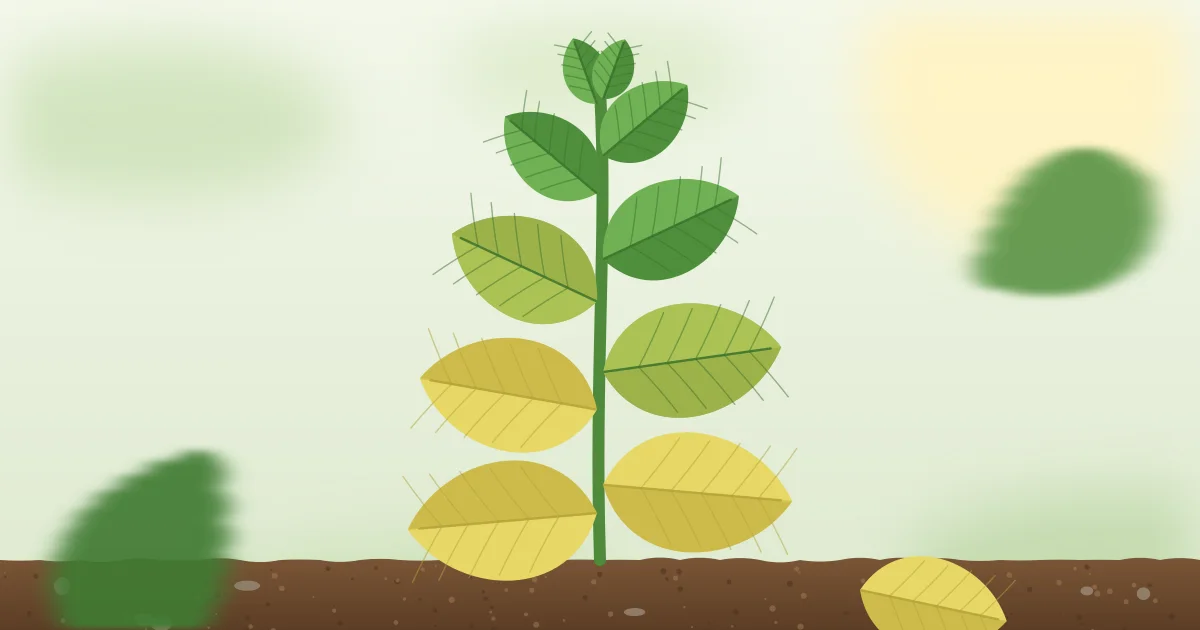
What you’re seeing
Older, lower leaves turn a uniform pale yellow-green across the whole leaf (not in a spotted or vein pattern), while new growth at the top of the plant remains a normal green; growth overall may also be slow and stunted.
Could it be something else?
Likely causes
Ranked most common first.
- Nitrogen is mobile within the plant. When nitrogen is in short supply, a plant pulls it out of older leaves and moves it to support new growth, which is exactly why deficiency symptoms show up on the oldest leaves first.
- Sandy or heavily leached soil. Nitrogen washes out of free-draining sandy soil quickly, especially after heavy rain or frequent watering.
- Cold soil. Soil microbes that convert organic nitrogen into a plant-available form slow down in cold soil, temporarily limiting supply even where organic matter is adequate.
- Heavy feeders planted without enough fertility. Corn, squash, and brassicas in particular use a lot of nitrogen and will show deficiency fastest in soil that has not been fed.
How to fix it
- Apply a balanced or nitrogen-forward organic fertilizer (fish emulsion, blood meal, or a balanced granular feed) according to label rate, and water it in well.
- Side-dress with a thin layer of finished compost or well-aged manure around the base of affected plants for a gentler, slower-release option.
- Expect a visible response within one to two weeks for a fast-acting liquid feed like fish emulsion; a slower granular or compost feed takes longer but lasts longer too.
- Do not over-correct - pushing nitrogen well past what a plant needs trades yellowing leaves for excess leafy growth at the expense of flowers and fruit.
- Warm the soil (black plastic mulch, or simply waiting for the season to progress) if cold soil is limiting microbial nitrogen release rather than an actual shortage.
Common mistakes
- Digging fresh wood chips or sawdust into the soil. Use them as a mulch on top instead, where they don't steal nitrogen from roots.
- Overcorrecting with a big dose of high-nitrogen fertilizer, which pushes leafy growth at the expense of fruit. Use the fertilizer calculator to work out a sensible rate.
- Feeding once at planting and never again. Heavy feeders need a side-dressing partway through the season.
- Adding nitrogen to beans and peas. They make their own - extra just gives you leaves.
When and where it shows up
Nitrogen deficiency shows up most in early spring when cold soil slows the release of nutrients, in sandy soil after heavy rain washes nitrogen out, and mid-season on heavy feeders like sweet corn, squash and brassicas. It can also appear after digging in fresh wood chips or sawdust - soil microbes breaking down woody material temporarily tie up nitrogen.
Preventing it next time
Work compost or aged manure into beds before planting each season, and side-dress heavy feeders like corn, squash and brassicas partway through their growing season rather than fertilizing once and stopping.
Questions gardeners ask
Will yellow leaves turn green again?
Usually not fully. The fix shows up in new growth and in leaves that were only slightly pale. Badly yellowed lower leaves can be removed.
How quickly does fish emulsion work?
Liquid feeds like fish emulsion often show a greener tint within one to two weeks. Granular organic fertilizers and compost take longer but last longer.
Are coffee grounds a good nitrogen source?
They contain some nitrogen but release it slowly, so they're not a quick fix. They're better added to compost than relied on as a fertilizer.
Is compost enough to prevent nitrogen deficiency?
For light feeders, often yes. Heavy feeders usually need an extra side-dressing. See composting basics for building soil over time.