How to grow cauliflower
Brassica oleracea (Botrytis) · Brassicaceae · Vegetable
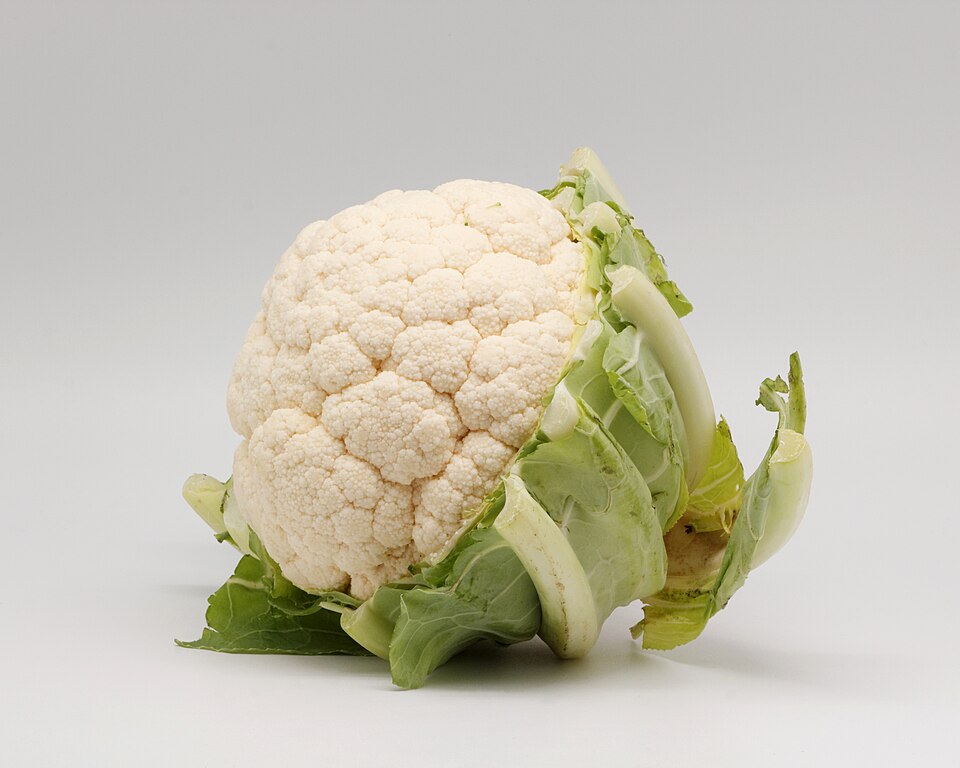
Cauliflower is a cool-season vegetable in the Brassicaceae family, usually started indoors and set out as transplants. It wants full sun (six or more hours of direct light) and plenty of water, especially in hot weather. From sowing to first pick is about 60–90 days. It shrugs off a light frost but a hard freeze will damage it.
Grower’s note: The fussiest brassica - any check from cold, heat, or drought ruins the head. Fall crops are far more reliable than spring. Blanch white types by tying leaves over the curd.
Sowing
Sow about 0.5″ deep, into soil between 45–85°F — germination is quickest near 75°F. It comes up fast (5–10 days). For an early crop, start seed indoors about 6 weeks before your last spring frost and grow it under bright light.
Spacing & layout
Give each plant about 18″ along the row with roughly 30″ between rows. On a square-foot grid that is 1 per square foot. Allow at least 18″ of loose, workable soil for the roots. It grows well in containers at least 12″ deep.
Fitting it to your season
As a cool-season crop, cauliflower does its best growing in the mild weather of spring and fall and tends to bolt or turn bitter in summer heat. A second sowing in late summer, timed to mature as the weather cools, is usually the better crop of the year — though a hard freeze will end it.
Quick facts
When to plant cauliflower
Companions
Onion, Beet, Potato, Celery, Dill
Tomato, Pole Bean, strawberry
Common problems
Pests: cabbage worm, cabbage looper, aphids, cabbage root maggot.
Diseases & disorders: clubroot, black rot, downy mildew.
Same family (Brassicaceae)
Rotate these so they don’t follow each other in the same bed year to year.
Figures are typical home-garden ranges from Cooperative Extension planting guides, cross-checked against multiple state sources. Your variety and conditions will vary.