Disease
Citrus leaves yellowing in a blotchy, asymmetric pattern
Last reviewed September 2026 · written from Cooperative Extension and university horticulture references — see how we source data
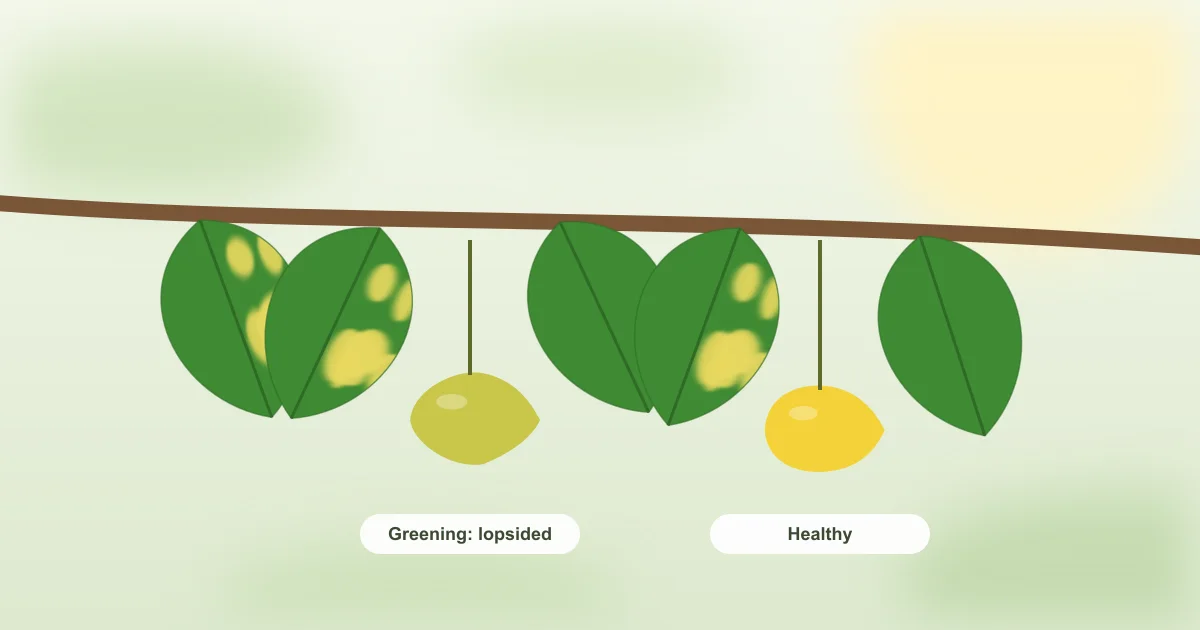
What you’re seeing
Leaves develop yellow, blotchy mottling that is asymmetric across the leaf (not a mirror image on either side of the midrib the way a simple nutrient deficiency usually is), sometimes with lopsided, bitter, poorly-colored fruit and stunted, thinning growth over a year or more.
Could it be something else?
Likely causes
Ranked most common first.
- Ordinary nutrient deficiency (the common, fixable cause). Nitrogen, iron, zinc, or manganese shortages are far more common than serious disease and typically produce a more symmetric yellowing pattern that responds to a citrus-specific fertilizer within weeks.
- Huanglongbing (citrus greening), where present. This bacterial disease, spread by the Asian citrus psyllid, causes the distinctive asymmetric blotchy mottling and eventually kills the tree; it is established in parts of the southern US and has no cure once a tree is infected.
- Root stress or poor drainage. Citrus roots are sensitive to waterlogging and can show yellowing and decline from root damage alone, independent of any disease.
How to fix it
- Try a citrus-specific fertilizer with micronutrients first, since ordinary deficiency is far more common than citrus greening and responds within a few weeks if that's the cause.
- Check the yellowing pattern carefully: symmetric, vein-following yellowing points to nutrients; asymmetric, blotchy mottling that doesn't match on either side of the leaf is the pattern worth taking to a local extension office.
- If citrus greening is suspected and you are in a region where it is present (parts of Florida, Texas, California, and the Gulf Coast), contact your county extension office - confirmed cases are usually reported to agricultural authorities and there is no home treatment.
- Improve drainage around the root zone if the tree is in heavy or waterlogged soil.
Common mistakes
- Moving citrus trees, cuttings or budwood across quarantine boundaries, which is how greening spreads to new areas.
- Using a general fertilizer without micronutrients. Citrus formulas include the magnesium, zinc, iron and manganese they need.
- Overwatering container trees, especially indoors in winter, which damages roots and yellows leaves.
- Ignoring the tiny, angled psyllids on new shoots in areas where greening is present.
When and where it shows up
Ordinary nutrient yellowing is common in late winter and early spring, when cold soil slows root uptake, and on container citrus that are underfed. Huanglongbing (citrus greening) is spread by the Asian citrus psyllid and is present in parts of Florida, Texas, California and other southern states, under quarantine. It affects lemons, oranges, limes, mandarins and grapefruit.
Preventing it next time
Feed with a citrus-specific fertilizer on a regular schedule, and if you are in a region with known citrus greening, control the Asian citrus psyllid and buy only certified disease-free nursery trees.
Questions gardeners ask
Can citrus greening be cured?
No. Infected trees decline over several years. If you suspect it in an area where it occurs, contact your state department of agriculture or local extension office for testing - do not move the tree.
Why do citrus leaves turn yellow in winter?
Cold soil slows nutrient uptake, so leaves pale in late winter and usually green up as the soil warms. Container trees in cold, wet mix are especially prone.
What fertilizer is best for citrus?
A citrus-specific fertilizer with micronutrients (magnesium, zinc, iron, manganese), applied little and often during the growing season.
How can I tell greening from a nutrient deficiency?
Nutrient deficiencies make a symmetric pattern on both halves of the leaf. Greening causes blotchy, lopsided mottling, often with small, lopsided, bitter fruit.