Disease
Stunted, wilting cabbage and broccoli: clubroot
Last reviewed September 2026 · written from Cooperative Extension and university horticulture references — see how we source data
What you’re seeing
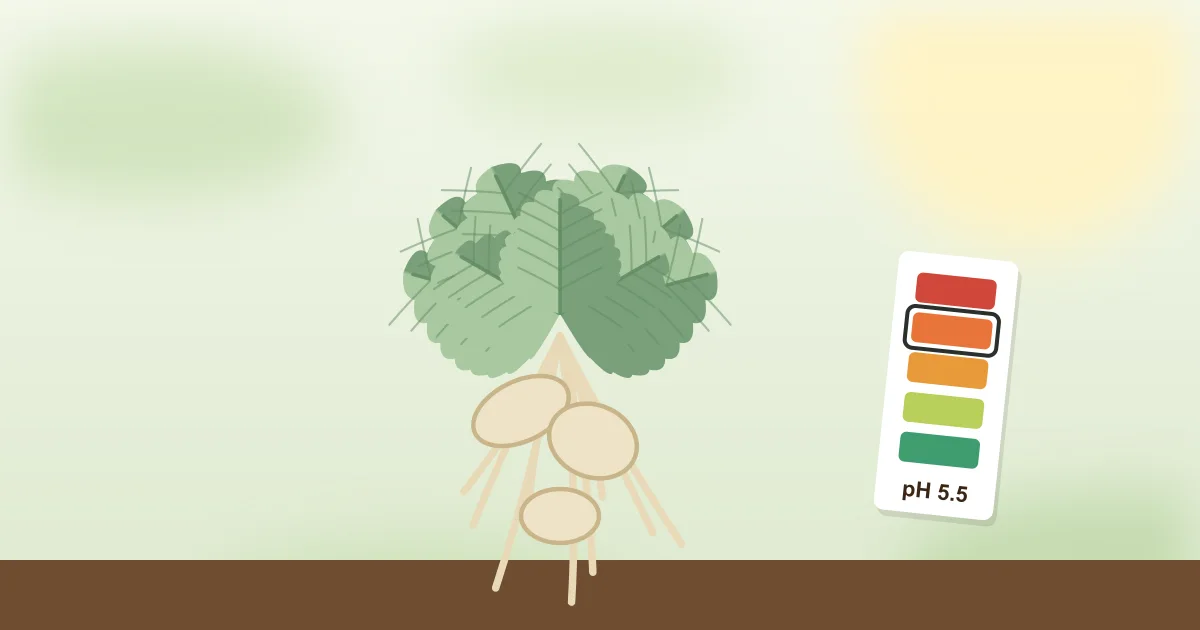
Brassica plants (cabbage, broccoli, cauliflower, kale) that are stunted, pale, and wilt during the heat of the day; pulling one up shows swollen, distorted, club-like galls on the roots instead of a normal fibrous root system.
Could it be something else?
Likely causes
Ranked most common first.
- A soil-borne slime mold. Plasmodiophora brassicae infects roots and causes them to swell into galls, which disrupts water and nutrient uptake and causes the classic daytime wilting.
- Acidic soil. The organism thrives in soil pH below about 6.8, which is one of the few levers a home gardener actually has against it.
- Repeated brassica plantings. Spores can persist in soil for many years, and the population builds with each successive brassica crop grown in the same bed.
How to fix it
- Confirm by pulling up a stunted plant and checking for club-shaped root galls rather than the healthy branching roots a nutrient or water problem would leave intact.
- Remove and discard (not compost) infected plants and their roots completely, since composting can spread spores throughout the garden.
- Raise soil pH toward 7.0-7.2 with garden lime, tested first with a soil test, since clubroot struggles in less acidic soil.
- Stop planting any brassica (cabbage, broccoli, kale, cauliflower, turnip, radish, arugula) in that bed for at least four to seven years.
- Improve drainage in the affected bed, since the organism spreads more easily through waterlogged soil.
Common mistakes
- Bringing in brassica transplants or soil from an infested garden - the spores travel with them.
- Composting infected roots, or sharing tools and soil between an infested bed and clean ones.
- Liming too little or too late. Lime needs time to raise pH; aim for 7.2 in affected beds, well before planting - see soil pH and testing.
- Sowing mustard or radish as a cover crop in an infested bed. They are brassicas too and keep the disease going.
When and where it shows up
Clubroot thrives in acidic, wet, poorly drained soil and shows as wilting in the heat of the day from mid-season on. It attacks every member of the cabbage family: cabbage, broccoli, kale, cauliflower, Brussels sprouts, turnips, radishes and brassica weeds such as shepherd's purse.
Preventing it next time
Rotate brassicas on the longest cycle you can manage (four-plus years), keep soil pH near neutral to slightly alkaline, and avoid moving soil or tools from a known clubroot bed to clean ground.
Questions gardeners ask
How long does clubroot stay in the soil?
The resting spores can survive for many years - often quoted as up to 20. That is why prevention and keeping it out of clean beds matter so much.
Can I ever grow brassicas in that bed again?
Possibly, after raising the pH, improving drainage and a long break, using clubroot-resistant varieties. Growing brassicas in a separate raised bed or containers of fresh soil is the more reliable option.
Does lime cure clubroot?
No, but raising soil pH to around 7.2 greatly reduces infection. It works best combined with good drainage and resistant varieties.
Is cabbage from an infected plant safe to eat?
Yes. If the head formed, it is fine to eat - clubroot affects the roots and growth, not food safety.