Pest
Holes in cabbage, kale and broccoli leaves
Last reviewed September 2026 · written from Cooperative Extension and university horticulture references — see how we source data
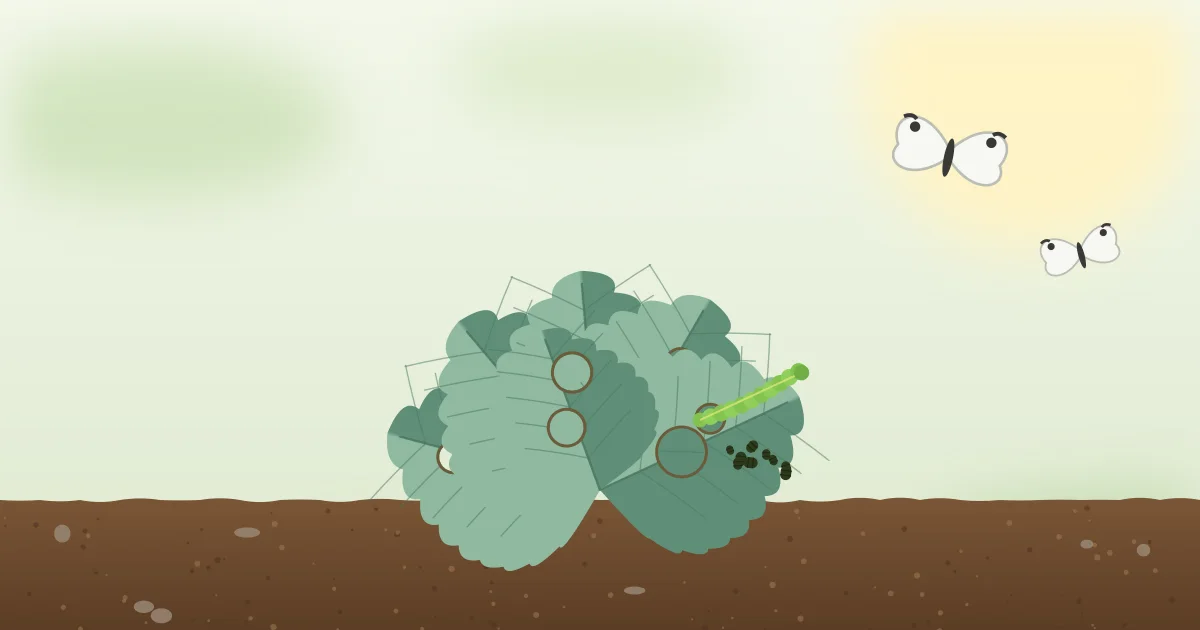
What you’re seeing
Irregular holes chewed through leaves, sometimes leaving only the veins (a "skeletonized" leaf), or many small round shot-holes concentrated on young leaves.
Could it be something else?
Likely causes
Ranked most common first.
- Cabbage worms and loopers. The pale green larvae of cabbage white butterflies and cabbage loopers chew large, ragged holes and often hide along the leaf midrib, matching its color closely.
- Flea beetles. Tiny, fast-jumping black beetles chew many small round holes (shot-holes) in young seedling leaves in early spring, and can kill small transplants outright.
- Slugs. Slug damage looks similar to caterpillar damage but comes with slime trails and happens mainly overnight - see the dedicated slug and snail guide for that case.
How to fix it
- Check the undersides of leaves for caterpillars and small clusters of yellow-white eggs; hand-pick what you find, which is usually enough for a home garden.
- Cover seedlings with lightweight insect netting or row cover from the day you transplant, sealed at the soil edges - this physically blocks both the egg-laying moths and flea beetles and is the single most effective fix.
- Spray Bacillus thuringiensis (Bt) on foliage for a caterpillar infestation that is already established; it targets caterpillars specifically and breaks down within days.
- For flea beetles on young transplants, dust leaves with diatomaceous earth or use a floating row cover until plants are past the vulnerable seedling stage (roughly 3-4 weeks).
Common mistakes
- Putting row cover on after the butterflies have already laid eggs. That traps the caterpillars inside with their food and keeps predators out - cover at planting time.
- Only looking at the tops of leaves. Cabbage worms are velvety green, lie along the midrib underneath and blend in almost perfectly.
- Spraying Bt just before rain. It washes off and also breaks down in sunlight within a few days, so reapply after rain.
- Leaving old brassica stumps and leaves in the bed over winter, where pests shelter until spring.
When and where it shows up
The imported cabbageworm - the caterpillar of the small white cabbage butterfly - feeds from spring to fall, and white butterflies fluttering over the bed are the first warning. Flea beetles are worst on young transplants in spring, when a few days of feeding can stunt them. Loopers are more common in late summer and fall. All of them target the cabbage family: cabbage, kale, broccoli, cauliflower, collards and Brussels sprouts, with flea beetles also riddling arugula and radish.
Preventing it next time
Row cover installed at transplant time prevents most of this damage before it starts, since it stops the adult moths and beetles from ever reaching the plant to lay eggs or feed.
Questions gardeners ask
Is it safe to eat kale or cabbage with holes?
Yes. Cut away badly damaged parts and wash well. Soak broccoli heads or cabbage in cold salted water for 15 minutes and hidden caterpillars float out.
What are the white butterflies around my cabbages?
Cabbage white butterflies. Each lays single pale eggs on the undersides of leaves, and the green caterpillars hatch within about a week and start feeding.
Does Bt harm bees or ladybugs?
The caterpillar strain of Bt (kurstaki) only affects caterpillars that eat treated leaves. It does not harm bees, ladybugs, people or pets, which makes it a good choice for brassicas.
Why are there tiny holes all over my arugula and radish leaves?
Flea beetles. They are worst in spring on young leaves. Row cover from sowing keeps them off, and later sowings in early summer and fall usually suffer much less.