Pest
Striped or spotted beetles chewing cucumber and squash leaves
Last reviewed September 2026 · written from Cooperative Extension and university horticulture references — see how we source data
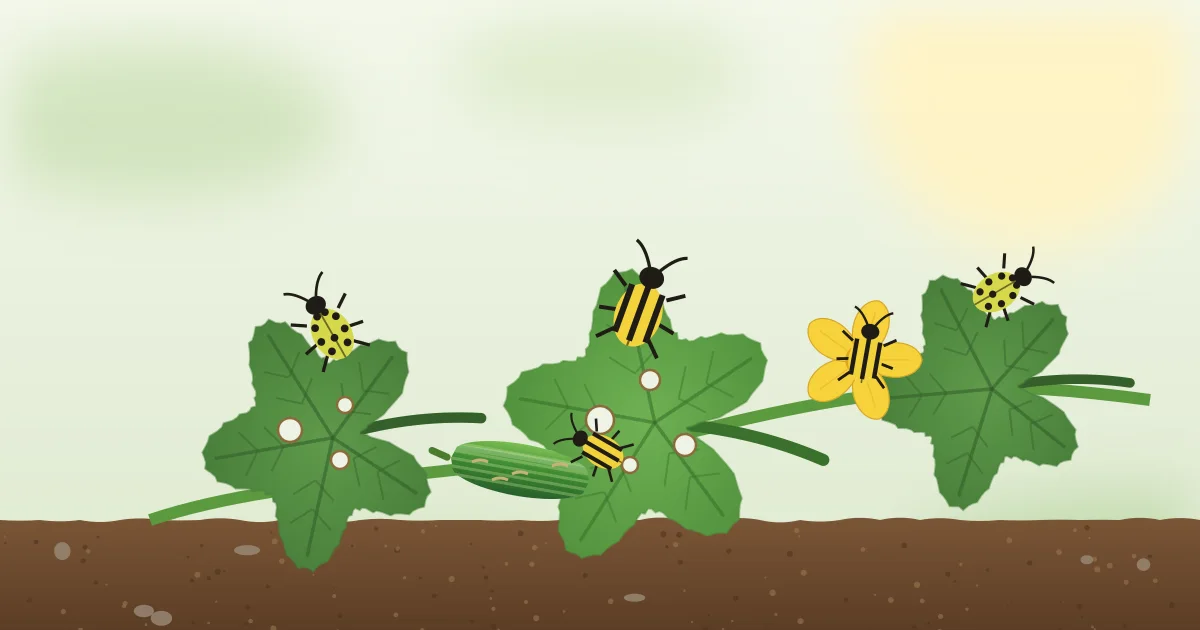
What you’re seeing
Small (roughly 1/4 inch) yellow beetles with either black stripes or black spots feeding on leaves, flowers, and sometimes the fruit surface of cucumbers, squash, and melons, leaving ragged holes and scarred fruit skin.
Could it be something else?
Likely causes
Ranked most common first.
- Striped or spotted cucumber beetles. These beetles overwinter as adults and emerge in spring to feed on cucurbit seedlings just as they germinate, when the plants are most vulnerable to both direct feeding damage and disease transmission.
- Bacterial wilt transmission. Striped cucumber beetles in particular carry the bacteria that cause bacterial wilt in their gut and introduce it directly into the plant through feeding wounds - see the dedicated bacterial wilt article for what happens next.
- Young, unprotected seedlings. Newly emerged seedlings and transplants are far more vulnerable than established plants, both to losing enough leaf tissue to stunt growth and to picking up disease from beetle feeding.
How to fix it
- Cover seedlings and young transplants with floating row cover from the day of planting until flowering, then remove it so pollinators can reach the flowers - this is the single most effective home-garden control.
- Hand-pick beetles into soapy water in the morning while they are sluggish, especially on a planting too advanced to cover.
- Use yellow sticky traps near the planting to monitor and reduce adult numbers.
- Remove and destroy any plant that develops sudden, irreversible wilting after beetle feeding, since that points to bacterial wilt transmission rather than recoverable feeding damage - see the bacterial wilt article for confirming this.
- Delay planting slightly where practical, since beetles are most concentrated right when they emerge from overwintering in early spring.
Common mistakes
- Leaving row cover on after the female flowers open. Bees need access or no fruit sets - uncover at flowering; see poor fruit set.
- Leaving wilted, infected plants in the bed. Beetles feeding on them pick up the bacteria and carry it to healthy plants.
- Spraying a broad-spectrum insecticide while plants are in flower, which kills the pollinators the crop depends on.
- Planting into cold soil very early. Slow-growing seedlings cannot outgrow the feeding damage.
When and where it shows up
Adult beetles overwinter in field edges and leaf litter and arrive as soon as cucurbit seedlings come up in spring - often in the same week. Seedlings and young transplants suffer most. A second generation often peaks in mid to late summer, feeding on flowers and scarring fruit. They attack cucumbers, cantaloupe, zucchini and other squash; cucumbers and muskmelons are the most vulnerable to the bacterial wilt the beetles carry.
Preventing it next time
Row cover from planting through flowering is the most reliable prevention, since it blocks both the feeding damage and the disease transmission at the vulnerable seedling stage.
Questions gardeners ask
How do I tell striped from spotted cucumber beetles?
The striped cucumber beetle is yellow with three black stripes down its back. The spotted cucumber beetle is yellow-green with twelve black spots. Both are about a quarter of an inch long and are managed the same way.
What is bacterial wilt?
A bacterial disease spread when cucumber beetles feed. Leaves wilt suddenly and do not recover, even with water, and the whole plant usually dies. There is no cure, which is why protecting young plants from the beetles matters so much.
Are cucumber beetles harmful to people?
No. They only damage plants.
Do yellow sticky traps catch helpful insects too?
Yes, some. Use only a few near the cucurbits to monitor and reduce beetles, and take them down once the plants are established and flowering.