Nutrient
Small, few, or hollow potato tubers at harvest
Last reviewed September 2026 · written from Cooperative Extension and university horticulture references — see how we source data
What you’re seeing
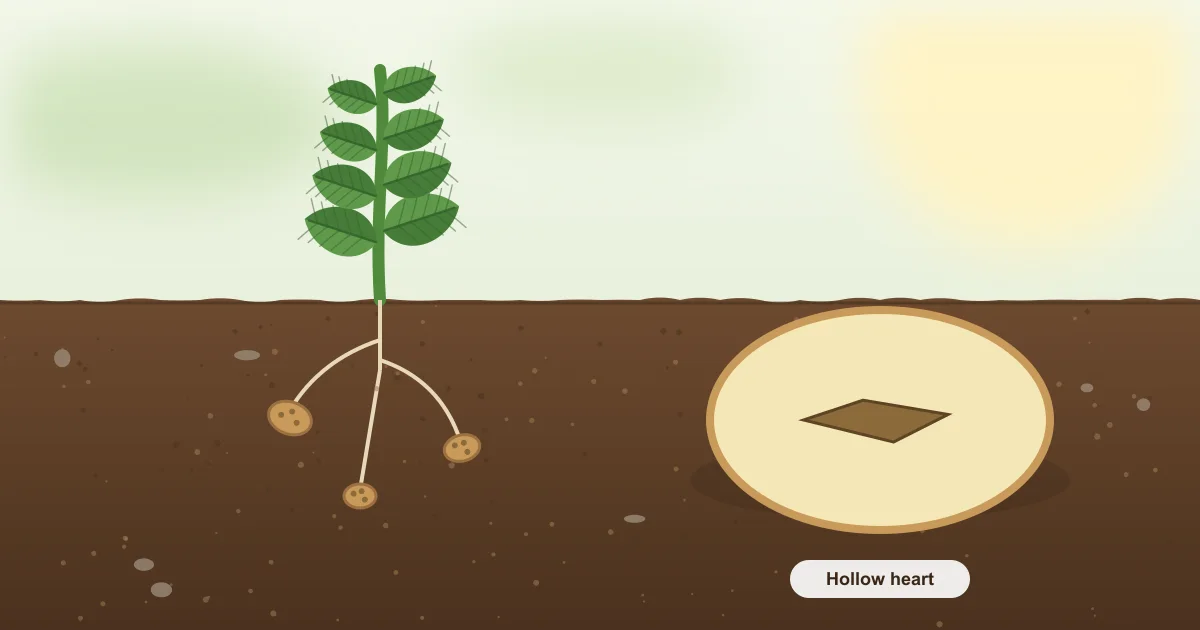
Digging potatoes reveals fewer tubers than expected, tubers that are much smaller than the variety should produce, or occasionally tubers with a hollow, dark-walled cavity in the center.
Could it be something else?
Likely causes
Ranked most common first.
- Hot soil during tuber formation. Potatoes stop forming new tubers efficiently once soil temperature rises above roughly 80°F, which is a common problem for plantings that bulk up right as summer heat peaks.
- Inconsistent watering. Alternating between drought stress and heavy watering during tuber development is one of the most common causes of both small size and hollow heart.
- Not enough hilling. Tubers form in the loose soil mounded around the stem; too little hilling leaves fewer tubers room to develop and can expose some to sunlight, causing them to green.
- Harvested too early. Pulling plants while still green and actively growing catches tubers before they have finished sizing up.
- Excess nitrogen relative to potassium. Very nitrogen-heavy soil pushes lush foliage at the expense of tuber development below ground.
How to fix it
- Keep watering consistent through the tuber-bulking stage (roughly from flowering onward) rather than letting soil swing between dry and saturated.
- Hill soil or mulch up around stems two to three times as plants grow, ending with a mound 6-8 inches high, to give tubers more room and protect them from light.
- Wait to harvest until foliage yellows and dies back on its own for full-size main-crop potatoes, reserving early digging for a few "new potatoes" only.
- In hot climates, plant early enough that the bulk of tuber formation happens before the hottest weeks of summer, or provide afternoon shade during a heat wave.
- Balance fertilizer toward potassium and phosphorus rather than heavy nitrogen once plants are established and flowering.
Common mistakes
- Feeding heavily with nitrogen, which produces big, leafy plants with few tubers.
- Digging main-crop potatoes as soon as they flower. Wait for the foliage to yellow and die back for full-size tubers.
- Skipping hilling. Tubers near the surface turn green and the plant has less room to form them.
- Letting the soil swing between dry and soaked while tubers are bulking - see watering a vegetable garden.
When and where it shows up
Potato tubers start forming around the time plants begin to flower and keep bulking up until the foliage dies back. Hot soil - above roughly 80°F - slows tuber formation, so late-planted crops in warm regions yield poorly. Hollow heart forms when tubers grow very fast after a stress, for example heavy rain or watering after a dry spell, or with very wide spacing.
Preventing it next time
Plant early enough to avoid peak summer heat during tuber bulking, hill consistently, and keep soil moisture even rather than letting it swing between extremes.
Questions gardeners ask
Are hollow potatoes safe to eat?
Yes. Cut out the cavity and any brown tissue around it; the rest of the potato is fine.
Are green potatoes safe to eat?
Cut away all the green parts, which contain higher levels of the natural toxin solanine. Discard potatoes that are green throughout or taste bitter.
When should I harvest potatoes?
For small new potatoes, from around flowering time. For full-size storage potatoes, two to three weeks after the tops have died back, so the skins can toughen.
Can I plant potatoes from the grocery store?
They may grow, but some are treated to stop sprouting and they can carry disease. Certified seed potatoes give a far more reliable crop.