Environmental
Seedlings wilting after transplanting: normal shock or something worse
Last reviewed September 2026 · written from Cooperative Extension and university horticulture references — see how we source data
What you’re seeing
A newly transplanted seedling droops or wilts within a day of being moved into the garden, ranging from mild leaf sag that clears up overnight to a total, crisp collapse that never recovers.
Could it be something else?
Likely causes
Ranked most common first.
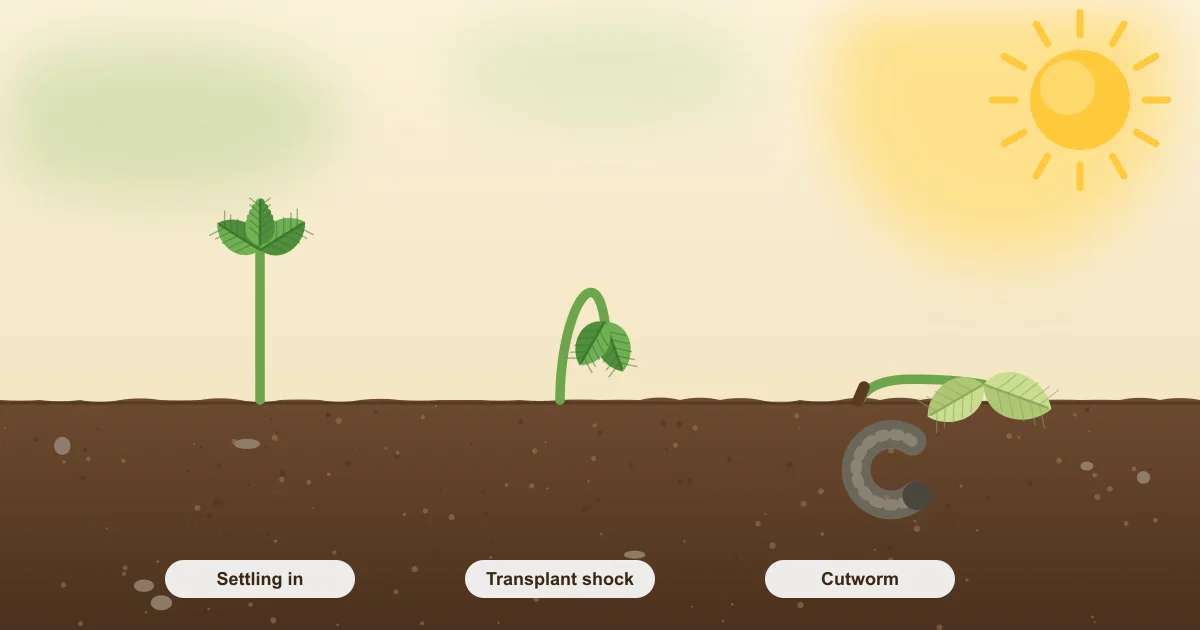
- Normal, temporary transplant shock. Roots disturbed during transplanting cannot yet keep up with the leaves' water demand; this typically shows as mild wilting that resolves within a day or two as new roots establish.
- Root damage during transplanting. Rough handling, a root-bound pot, or planting into overly dry or overly compacted soil can damage or fail to establish the root system, causing wilting that does not recover.
- Insufficient hardening off. Seedlings moved outdoors too abruptly from a protected indoor environment can wilt from sun and wind stress they were never conditioned for.
- Cutworm or vole damage at the stem base. A wilted seedling that has been severed or girdled right at the soil line, rather than gradually drooping, points to a pest cutting the stem rather than root stress.
How to fix it
- Give a normally-wilting transplant a thorough watering and light temporary shade (an overturned pot or shade cloth) for a day or two; if it perks back up, no further action is needed.
- Check the stem at the soil line if wilting is sudden and total rather than gradual - a clean cut or missing stem points to cutworms, not shock, and calls for a cutworm collar around remaining seedlings.
- Water new transplants in well immediately at planting time and again the following day, since consistent moisture during the first week is the single biggest factor in how fast roots re-establish.
- For seedlings that were not properly hardened off, provide shade and wind protection for several days rather than expecting them to recover unprotected.
- Replace transplants that do not recover within about a week rather than waiting longer - by that point, root damage is usually too extensive to reverse.
Common mistakes
- Skipping hardening off. Seedlings raised indoors have soft leaves that scorch and wilt in full sun and wind - see hardening off seedlings.
- Transplanting in the middle of a hot, sunny day instead of the evening or on a cloudy day.
- Feeding heavily straight after planting. Damaged roots cannot use it yet, and strong fertilizer can burn them.
- Watering a wilting plant again and again when the soil is already wet. Check the soil first.
When and where it shows up
Transplant wilting happens in the first two or three days after planting out, especially on sunny, hot or windy days, and with seedlings that were root-bound, not hardened off, or planted in the heat of the afternoon. Tender crops such as tomatoes, peppers, cucumbers and squash show it most; lettuce and brassicas usually bounce back fastest.
Preventing it next time
Harden off seedlings gradually over 7-10 days before transplanting, water thoroughly at transplant time, and transplant on a calm, overcast day or in the evening rather than during peak afternoon sun.
Questions gardeners ask
How long does transplant shock last?
Mild wilting usually clears within a day or two. Growth may pause for one to two weeks while roots re-establish, then pick up again. See transplanting without shock.
Can a wilted seedling recover?
Yes, if the stem is intact and the roots are healthy. Keep the soil evenly moist and shade the plant for a few days. If it has not perked up within about a week, replace it.
Should I cut leaves off a wilting transplant?
Usually not. Removing one or two lower leaves can help a plant whose roots were badly damaged, but the leaves are what the plant needs to recover.
Should I shade new transplants?
In strong sun, yes - for two or three days. A board, shade cloth or an upturned basket on the sunny side cuts water loss while the roots settle in.