Environmental
Pale, papery patches on tomatoes and peppers: sunscald
Last reviewed September 2026 · written from Cooperative Extension and university horticulture references — see how we source data
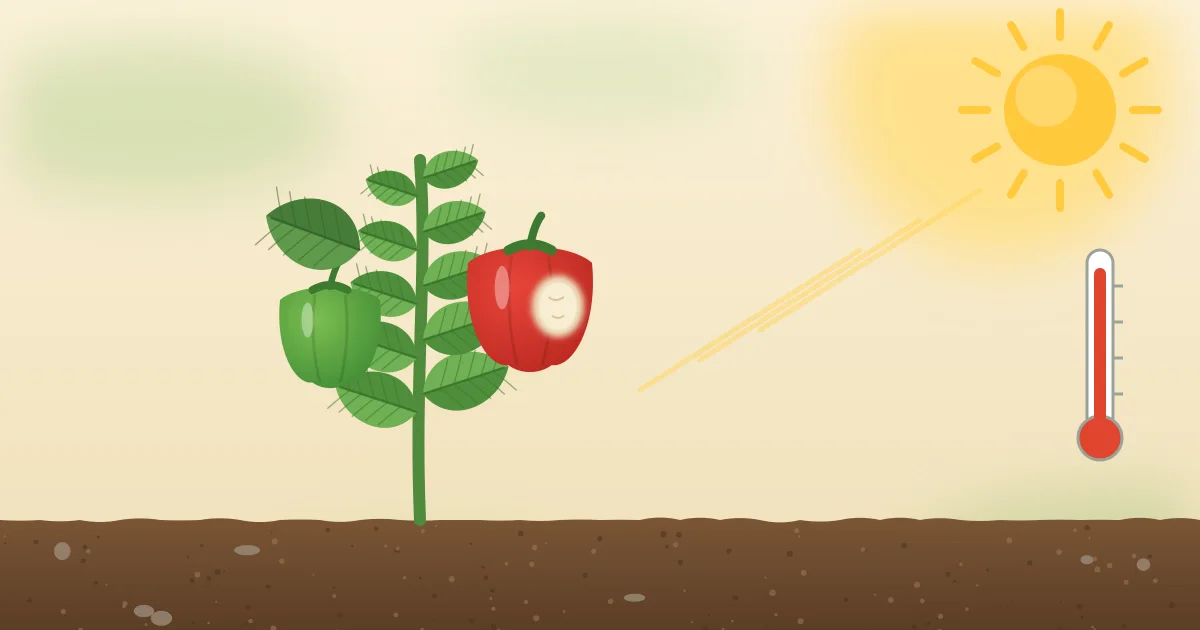
What you’re seeing
A pale white, yellow, or tan patch on the side of a fruit facing the sun, often with a papery or slightly blistered texture, that may later be colonized by mold or rot once the skin is compromised.
Could it be something else?
Likely causes
Ranked most common first.
- Sudden loss of leaf cover. Heavy pruning, storm damage, or disease that strips foliage suddenly exposes previously shaded fruit to direct sun it was not conditioned for.
- A sudden heat wave. A fast jump to high temperatures can scald fruit even under otherwise normal leaf cover, especially on the side facing afternoon sun.
- Heavy fruit load bending the plant. Fruit-heavy branches that sag or tip over can rotate previously shaded fruit into direct sun exposure.
How to fix it
- Harvest scalded fruit promptly, even if underripe - the damaged patch is a rot entry point, and ripening it indoors on a counter avoids losing the fruit to secondary rot.
- Cut away the pale, papery patch before eating or cooking; the rest of the fruit is usually fine.
- Provide temporary light shade cloth (30% shade) over exposed fruit clusters during an unexpected heat wave.
- Avoid removing more than about a quarter of a plant's foliage in a single pruning pass, since that is usually the threshold where previously shaded fruit gets suddenly overexposed.
Common mistakes
- Stripping off lots of leaves or suckers in a hot climate. The foliage is what shades the fruit.
- Letting leaf diseases defoliate plants unchecked - the bare fruit that is left is then exposed to full sun.
- Spacing peppers far apart in hot areas. Planted a little closer, their canopies shade each other's fruit.
- Leaving scalded fruit on the plant to finish ripening. The damaged patch is an entry point for mold and rot.
When and where it shows up
Sunscald appears in mid to late summer during hot, bright spells, especially after heavy pruning, after leaf diseases have stripped the lower plant, or when a heavy truss flops out into the sun. Peppers are the most prone, then tomatoes; eggplant, melons and even apples can be scalded too. Fruit on the south and west sides of the plant is most at risk.
Preventing it next time
Prune gradually rather than all at once, keep plants adequately watered so leaf canopy stays full through hot weather, and stake or support heavy fruit clusters so they don't sag into direct exposure.
Questions gardeners ask
Is sunscalded fruit safe to eat?
Yes. Cut away the pale, papery patch and any soft tissue beneath it; the rest of the fruit is fine. Use it soon, as scalded fruit does not store well.
Will shade cloth reduce my harvest?
Light shade cloth (around 30%) over tomatoes and peppers during heat waves usually cuts sunscald without a noticeable loss of yield, and in very hot climates it can help fruit set.
Why is only one side of the fruit damaged?
Sunscald happens where direct sun heats the fruit surface - usually the side facing the afternoon sun - while the shaded side stays cool.
Can leaves get sunscald too?
Yes. Seedlings moved straight from indoors into full sun get bleached, papery patches on their leaves - see hardening off seedlings.