Environmental
Tomato and pepper flowers falling off without setting fruit
Last reviewed September 2026 · written from Cooperative Extension and university horticulture references — see how we source data
What you’re seeing
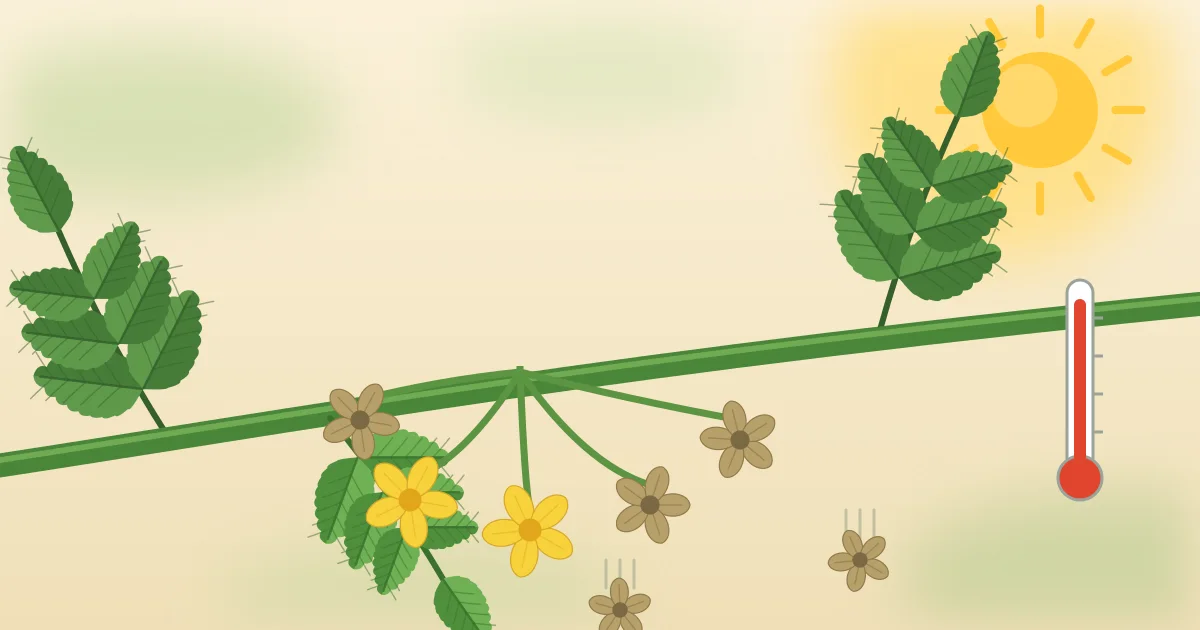
Flowers open, look normal, then dry up and drop from the plant within a few days without any fruit forming behind them; the rest of the plant usually looks healthy.
Could it be something else?
Likely causes
Ranked most common first.
- Night temperatures too warm or too cool. Tomatoes set fruit poorly when nights stay above about 75°F or drop below about 55°F; peppers are similarly sensitive to nights above roughly 75-80°F.
- Daytime heat above about 90-95°F. Extended heat waves stress pollen viability and flower structure even if nights are otherwise fine.
- Low humidity or high humidity extremes. Very dry air can dehydrate pollen; very humid, still air can make pollen clump instead of falling freely onto the flower's own stigma.
- Excess nitrogen. Heavily nitrogen-fed plants push lush leafy growth at the expense of flowering and fruit set.
- Poor pollination. Tomatoes and peppers are usually self-pollinating with help from wind and vibration, but still air with no breeze or pollinator activity can reduce success.
How to fix it
- Wait it out during a heat wave - blossom drop from temperature stress is temporary, and the plant will resume setting fruit once conditions moderate, usually within a week or two.
- Give plants a gentle midday tap or shake on the main stem every day or two to help pollen release and distribution during still weather.
- Ease off high-nitrogen fertilizer and switch to a bloom-supporting formula lower in nitrogen and higher in phosphorus and potassium if lush leafy growth with few flowers is the pattern.
- Provide light afternoon shade (30-40% shade cloth) during the hottest weeks of summer to bring leaf and flower temperatures down a few critical degrees.
- Keep soil evenly moist through a heat wave, since drought stress compounds heat stress and worsens blossom drop further.
Common mistakes
- Adding more fertilizer to "fix" it. Extra nitrogen makes flower drop worse by pushing leaves instead of fruit - check your rate with the fertilizer calculator.
- Pulling off the remaining flowers or pruning hard in frustration. The plant will start setting again once temperatures ease.
- Letting plants dry out during a heat wave. Drought stress on top of heat stress makes the drop worse.
- Planting out too early. Tomatoes set in cold nights drop their first flowers - wait until nights stay above 50°F; your planting calendar gives the safe window.
When and where it shows up
Blossom drop happens in two windows: early in the season when nights are still below about 55°F, and in midsummer heat waves when days pass 90°F and nights stay above about 75°F. It's most common on tomatoes and bell peppers, and also affects eggplant and beans. Large-fruited tomatoes are usually more sensitive than cherry types.
Preventing it next time
Choose heat-tolerant tomato and pepper varieties in hot-summer regions, avoid heavy nitrogen fertilizer once flowering starts, and plan for afternoon shade cloth if your area regularly sees stretches above 95°F.
Questions gardeners ask
Will my plants start setting fruit again?
Yes. Blossom drop from temperature is temporary. Once nights come back into the 55-75°F range, new flowers usually set normally within a week or two.
Do blossom-set sprays work?
Hormone sprays can help set fruit in cool early-season weather, but the fruit is often seedless and oddly shaped. They don't help in hot weather, which is when most blossom drop happens.
Do tomatoes need bees to set fruit?
Not strictly - tomato flowers pollinate themselves when shaken by wind or bumblebees buzzing. In still air, gently tapping the flower stems every day or two helps.
Which tomato varieties handle heat best?
Look for varieties described as heat-set or heat-tolerant on the seed packet. Cherry and grape tomatoes also generally set better in heat than large beefsteaks.