Cultural / care
Your fruit tree or bush never fruits: the usual reasons why
Last reviewed September 2026 · written from Cooperative Extension and university horticulture references — see how we source data
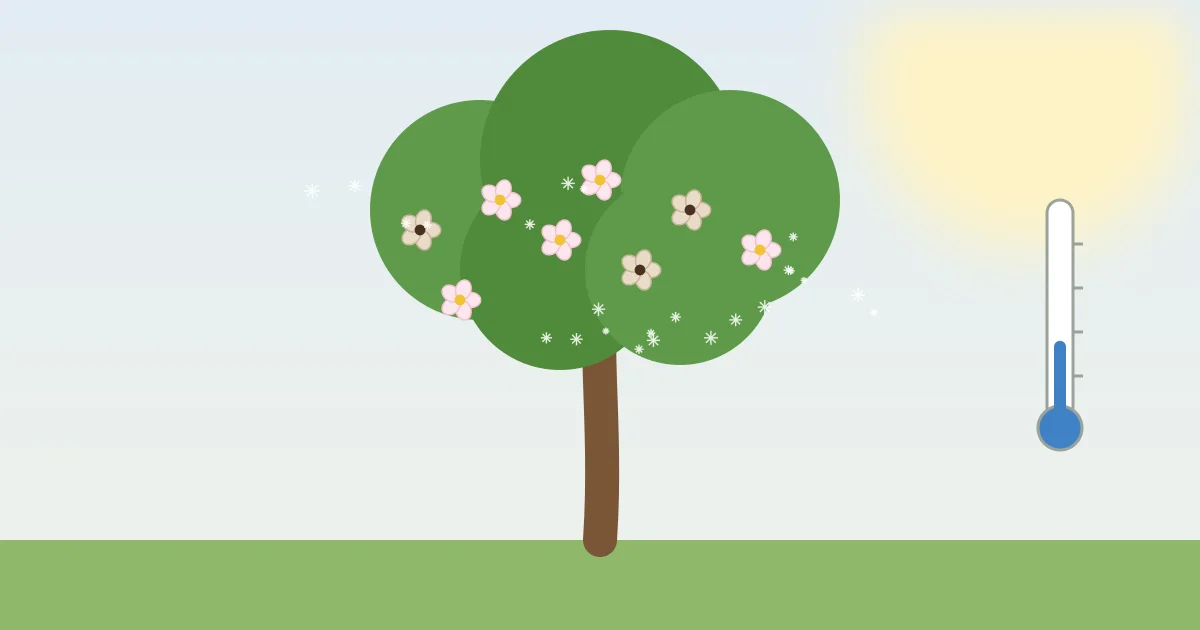
What you’re seeing
A fruit tree or shrub grows normally, sometimes even flowers, but produces little or no fruit year after year.
Could it be something else?
Likely causes
Ranked most common first.
- Still too young. Most fruit trees need several years of establishment before they fruit reliably - apples and pears often take 3-5 years, some stone fruit less, and this delay is completely normal and not a sign of a problem.
- No compatible pollinator nearby. Many fruit tree varieties (most apples, many pears and sweet cherries) are self-sterile and need a different, compatible variety blooming nearby at the same time to set fruit at all.
- Frost damage to flower buds. A late spring frost after flower buds have opened can kill the flowers outright, which shows up as "no fruit" months later with no other obvious symptom.
- Excessive pruning or heavy nitrogen fertilizer. Both push vigorous vegetative growth at the direct expense of the flower buds that would have become fruit.
- Alternate bearing. Some fruit trees, apples especially, naturally produce a heavy crop one year followed by a light or absent crop the next, as the tree recovers from the previous year's fruit load.
How to fix it
- Check the tree or shrub's expected age to first fruiting for its specific type before assuming there is a problem - young trees simply need patience.
- Plant a second, compatible variety within about 50-100 feet if the current one is known to need a pollinator partner, or graft a compatible branch onto the existing tree.
- Protect flowers from a forecast late frost with a floating row cover or old sheet thrown over smaller trees and shrubs overnight.
- Ease off nitrogen fertilizer and reduce pruning to a light, targeted touch, especially on a tree that is growing vigorously but not flowering.
- For alternate bearing, thin fruit heavily in a heavy year (removing a good portion of developing fruit by hand) to even out the cycle over a few seasons.
Common mistakes
- Pruning hard every winter. On apples and pears that removes the short fruiting spurs, and the tree answers with a flush of leafy shoots instead of flowers.
- Feeding with high-nitrogen fertilizer, or letting lawn fertilizer spread under the tree, which pushes leaves at the expense of flowers.
- Planting a single tree of a type that needs a pollination partner.
- Pairing two varieties that bloom at different times, so their flowers never overlap. Check the bloom group as well as compatibility.
When and where it shows up
It is usually noticed in spring, when blossoms come and go without fruit, or once a tree reaches the age it should bear. Time to the first real crop varies a lot - roughly two to four years for dwarf apples and peaches, four to seven for standard apples, pears and sweet cherries, and longer for nut trees. Many common fruits need a second, compatible variety nearby, including most apples, pears, sweet cherries and Japanese plums; blueberries crop far better with a partner.
Preventing it next time
Research a variety's pollination needs and years-to-fruit before planting, avoid heavy nitrogen and aggressive pruning on young trees, and have frost protection ready for the flowering window each spring.
Questions gardeners ask
How long does it take a fruit tree to bear fruit?
As a rough guide: dwarf apples and peaches two to four years, standard apples, pears and sweet cherries four to seven, blueberries two to three, and pecans and walnuts six to ten or more. Trees on dwarfing rootstocks bear sooner.
Do I need two fruit trees to get fruit?
For many apples, pears, sweet cherries and Japanese plums, yes - a different, compatible variety blooming at the same time within about 50-100 feet. Peaches, sour cherries and most European plums are self-fertile. The pollination checker tool shows which pairs work.
Can I make a fruit tree bear sooner?
Prune lightly, avoid heavy nitrogen, keep the tree watered, and bend young upright branches toward horizontal - flatter branches tend to form fruit buds sooner. Choosing trees on dwarfing rootstocks helps from the start.
Why does my tree flower but not fruit?
Usually poor pollination - no partner variety, or cold, wet weather during bloom that kept bees away - or a late frost that killed the flowers. See attracting pollinators.