Cultural / care
Lush, healthy-looking plants that never flower or fruit
Last reviewed September 2026 · written from Cooperative Extension and university horticulture references — see how we source data
What you’re seeing
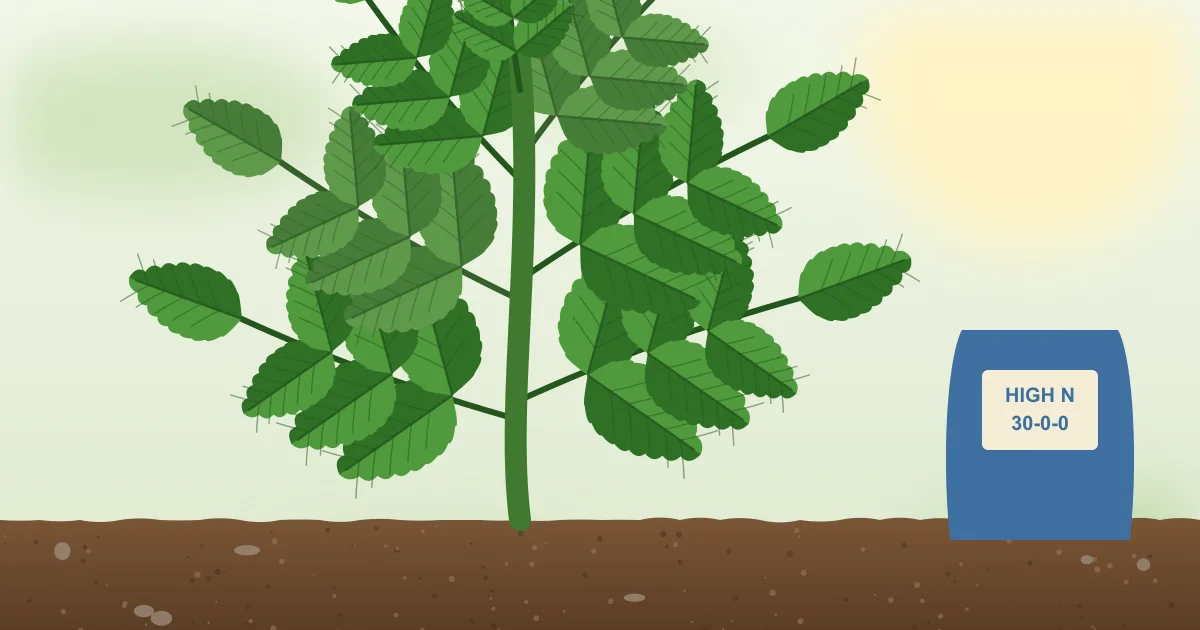
A plant grows vigorously, with abundant dark-green leaves and thick stems, but produces few or no flowers, and consequently little or no fruit, well past the point it should normally be flowering.
Could it be something else?
Likely causes
Ranked most common first.
- Too much nitrogen relative to phosphorus and potassium. Nitrogen drives leafy, vegetative growth; when it dominates a plant's nutrient balance, that growth comes at the direct expense of the flowering and fruiting the plant would otherwise be putting energy into.
- Too much shade. Fruiting crops in particular need a genuine minimum of six-plus hours of direct sun to flower reliably; a plant surviving in too little light will grow toward available light rather than reproduce.
- Wrong day length or season for the variety. A handful of crops (notably some flowering ornamentals grown alongside vegetables) are day-length sensitive and simply will not flower outside their triggering season regardless of care.
- Too young or still establishing. Some perennial and long-season crops need a full growing season of vegetative establishment before they flower at all, which can look identical to a nutrient problem in year one.
How to fix it
- Stop all nitrogen fertilizer immediately and switch, if fertilizing at all, to a low-nitrogen, phosphorus-and-potassium-forward "bloom" formula.
- Check actual daily direct sun exposure with a simple hour-by-hour observation - six hours is a hard minimum for most fruiting vegetables, and afternoon shade from a growing tree nearby is easy to underestimate.
- Be patient with a first-year perennial or a naturally slow-to-mature crop; confirm the expected timeline for that specific crop before assuming a fix is even needed.
- Avoid pinching or heavily pruning a plant that has finally started to set flower buds, since that removes the very growth you have been waiting for.
- If soil test results show very high nitrogen, consider a season of a nitrogen-hungry cover crop or heavy-feeding crop (corn, squash) in that bed to draw levels back down before returning to the fruiting crop.
Common mistakes
- Adding more fertilizer to 'push' flowering. Most general-purpose feeds add yet more nitrogen and make the problem worse.
- Feeding fruiting vegetables with lawn fertilizer or other high-nitrogen products.
- Pruning hard to force fruit. Removing lots of leaves stresses the plant and on tomatoes usually delays fruiting further.
- Giving up too soon. Peppers and eggplant often sit green and leafy until nights warm up, then set fruit quickly.
When and where it shows up
It shows up in midsummer, when a plant should be flowering and is not. Most at risk are tomatoes, peppers, squash and beans in rich soil, after heavy feeding with a high-nitrogen fertilizer or fresh manure, or growing in partial shade. Nitrogen-rich lawn fertilizer drifting into the bed, or thick mulches of fresh grass clippings, can do it too.
Preventing it next time
Fertilize fruiting crops with a balanced or bloom-forward formula rather than a high-nitrogen one, confirm sun exposure meets the crop's real minimum, and give slow-to-mature crops the season they actually need before troubleshooting further.
Questions gardeners ask
What fertilizer encourages flowering and fruit?
One that is lower in nitrogen relative to phosphorus and potassium, such as a tomato feed - and only if the plant actually needs feeding. A soil test tells you whether it does.
How long before tomato plants flower?
Most varieties start flowering within about a month of transplanting. Large indeterminate heirlooms can take longer, especially in cool weather.
Does too much water stop fruiting?
Constant heavy watering combined with a lot of nitrogen encourages leafy growth, and waterlogged roots stress plants. Water deeply but let the top inch or two dry between waterings.
Should I remove leaves to get more fruit?
Generally no. Remove only yellowing leaves and those touching the soil. The leaves make the sugar that ripens the fruit.